


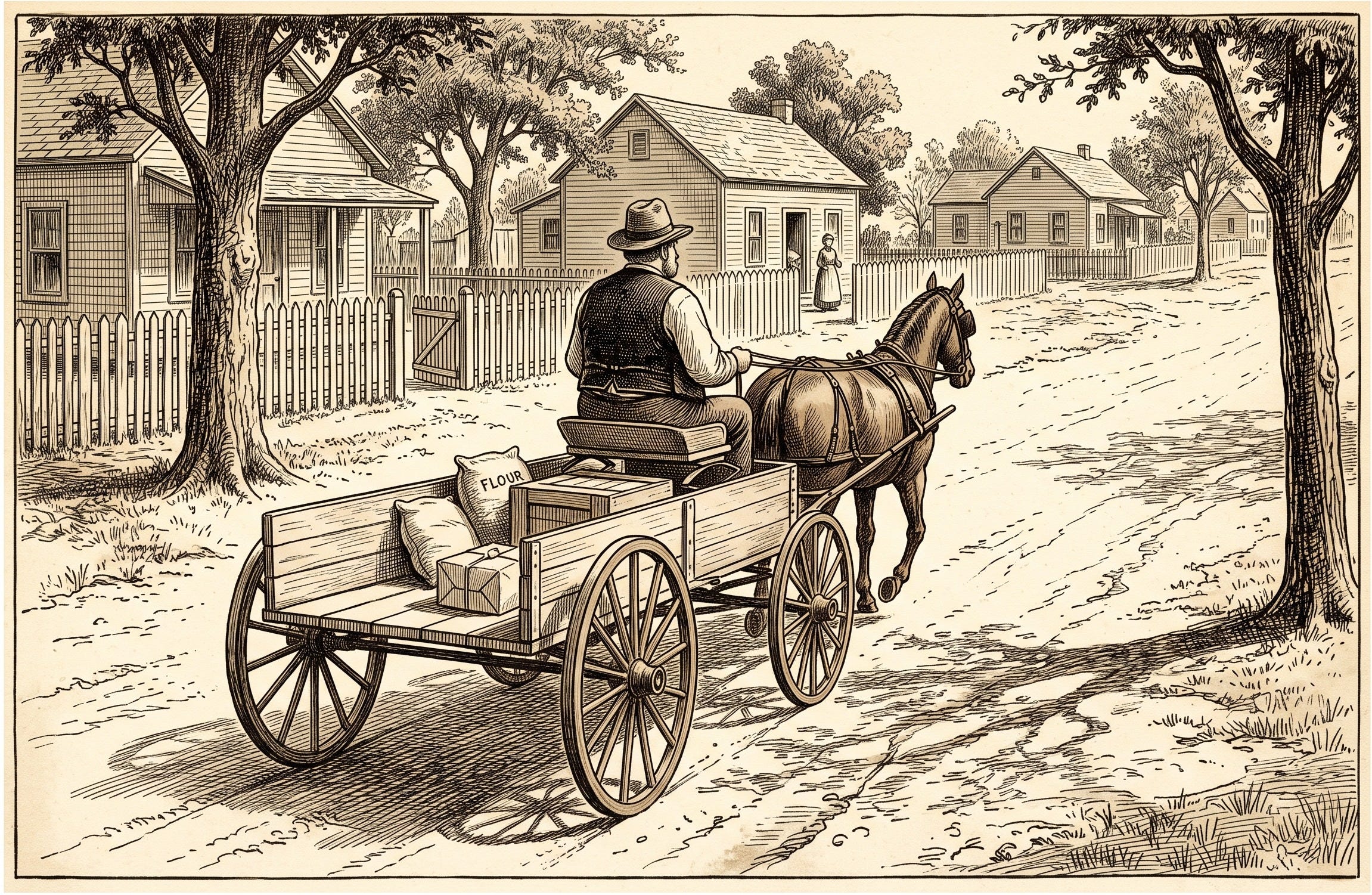
“What would you like this morning, Mrs. Wright?”
That’s how Hamilton Wright opened a column in the Williamson County Sun on February 4, 1971. He was 85, a retired Abilene newspaperman who’d grown up here, and he was remembering a morning in Georgetown in the late 1890s when a man tapped at the kitchen door to ask what the house needed for the day.
Wright had come to Georgetown in 1896, at 11, with his father, his older brother Jim, and a young stepmother from Oregon whom the boys had compromised on calling “Marie.” From 1898 they lived in a little house in the 200 block of Main, “a street then without numbers or name.” He said it was still standing when he drove past in 1977.
The man at the door was a grocery solicitor. In the 1890s, Wright explained, Georgetown grocers “dispatched men to homes to solicit. The solicitor made a round of homes, returned to the store, filled the orders, and made deliveries.” Within a couple of hours a horse-drawn wagon pulled up and the goods came in by the back door, checked against a list.

This solicitor didn’t carry a pad. He couldn’t have used one.
But this particular solicitor, a wizard at his task, was illiterate. His memory was simply amazing. He was as accurate as any normal solicitor who had written the items on a pad.
Young Wright stood in the kitchen and heard him repeat his stepmother’s order back to her, “the brand, the quantity, the price amount,” item by item, from memory. When the wagon came, the order was “precisely” what she’d asked for, “no item missing, none damaged, the exact poundage called for, and the very trade brand in the lot.” Wright never got over it. “How he did it will always be a mystery to me! What he lacked in letters he made up in memory.”
He remembered the man himself as “a genial, pleasant, rotund man, hailing you with a merry ‘Good morning!’” who was “always on the job” and “honest as the day was long.” He called him Mr. Forgy.
That’s all he had. No first name, no employer, no street. Wright closed with a line he probably didn’t think twice about: “Just what became of Mr. Forgy, we do not know!” Then, in a jump-to-page-four ending with a period and an exclamation point side by side: “We need more Forgies.!”

Three men who take orders
I’m not sure if anyone today remembers that this job existed, but Georgetown’s grocers left instructions.
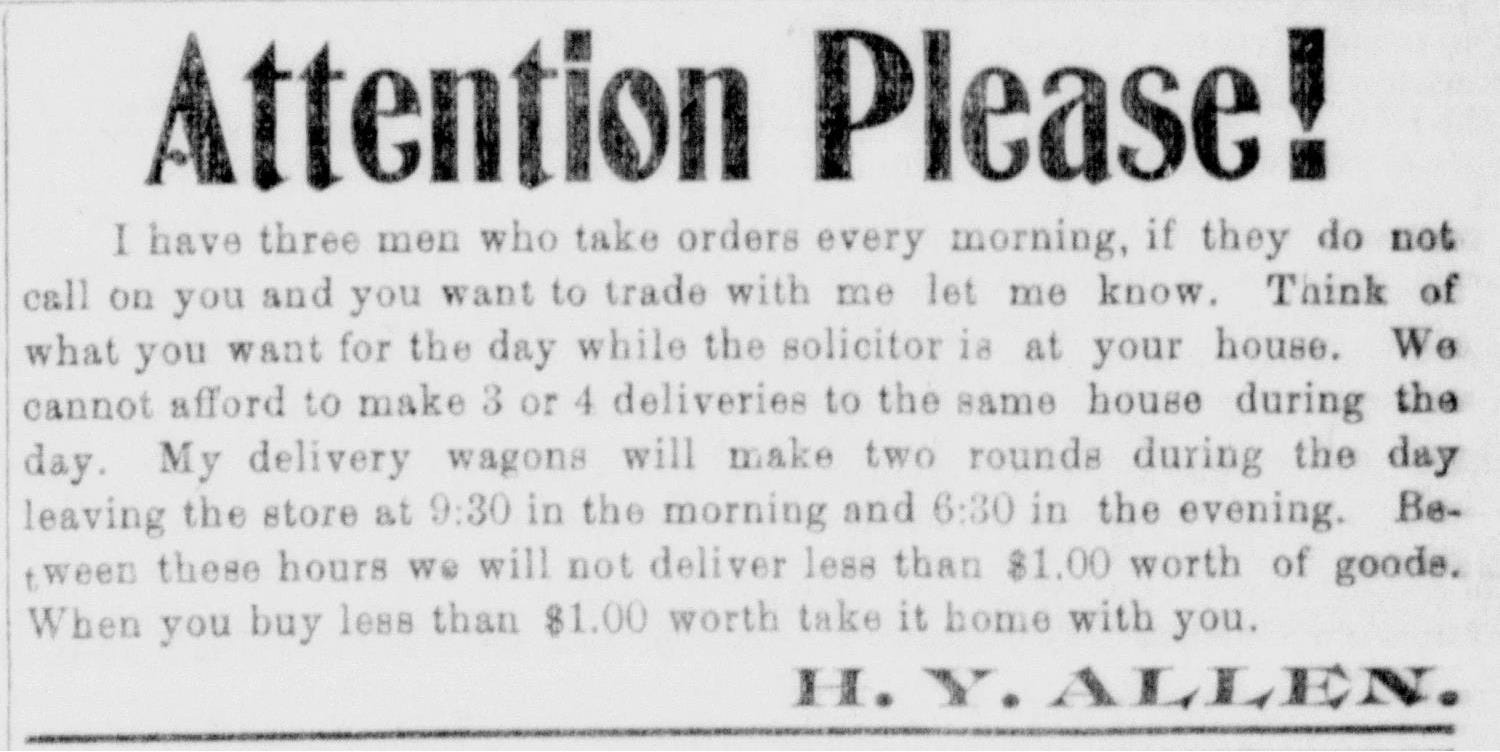
In August 1898, H. Y. Allen ran an ad headed “Attention Please!” He had “three men who take orders every morning,” and if they hadn’t called on you and you wanted his trade, he’d send one. His delivery wagons left the store twice a day, at 9:30 in the morning and 6:30 in the evening. Then came the complaint that tells you the system was working almost too well: “We cannot afford to make 3 or 4 deliveries to the same house during the day.” Between rounds he wouldn’t deliver less than a dollar’s worth. “Think of what you want for the day while the solicitor is at your house.”
Allen wasn’t alone. Wright said “few other grocer solicitors could compete with Mr. Forgy,” which means there were others to compete with. At the New Year of 1900, Allen moved his store to the east side of the square, and the Sun reported that side “will now be known as ‘grocery row,’ there being three in a line.”
What the solicitors were carrying in their heads is on the page, too. Allen’s ad of November 1, 1900 offered California canned goods at 15 cents a can, three cans of tomatoes for a quarter, baking powder at 20 cents a pound in your choice of Perfect, Hughes or Kitchen Queen, Jonah flour at a dollar a sack, bacon at a dime a pound, and Chase & Sanborn coffee. Wright remembered the Saturday special, 21 pounds of sugar for a dollar. Those are the brands and poundages a man had to recite back at the kitchen door and again at the counter.
The telephone would eventually put the solicitor out of work. In December 1884 a letter in the Sun pitching a telephone exchange said the phone was “almost indispensable to the busy housewife, who can, by this means, order in five minutes, without any trouble, anything she needs, as groceries or marketing of any kind.” (I wrote about that letter in The Town Rules for the Phone.) In the 1890s, though, most Georgetown kitchens still didn’t have a phone. They had a man who came to the door.
Just what became of Mr. Forgy
Wright wondered what became of him, so I went looking for Mr. Forgy, expecting a quick answer. Wright wrote more than 100 columns for the Sun in the 1970s, and I archived all of them. Mr. Forgy appears only the one time. I search “Forgy” from 1880-1920; no results. I reviewed grocer’s ads from the 1890s. No Forgy. I pulled every man in Georgetown the 1900 census marked as unable to read or write, 40 of them, and went down the list. No Forgy, and nothing that sounded like Forgy.
I started to wonder whether Wright, a young boy at the time, had misheard the name.
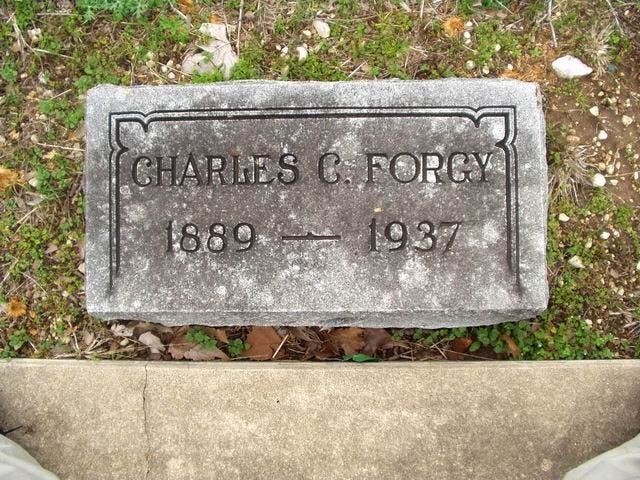
The first crack came from a 1937 death certificate. I’d found a Charlie Forgy in the Sun in the 1920s. A Charles C. Forgy, 47, highway foreman, was killed when his niece lost control of their car on Highway 81 south of Belton. Residence: Georgetown. Buried in Georgetown the next day. Father, John Forgy. Charles was born in December 1889, far too young to be Wright’s grocery solicitor, but a Forgy family with Georgetown roots existed, and it had a father.
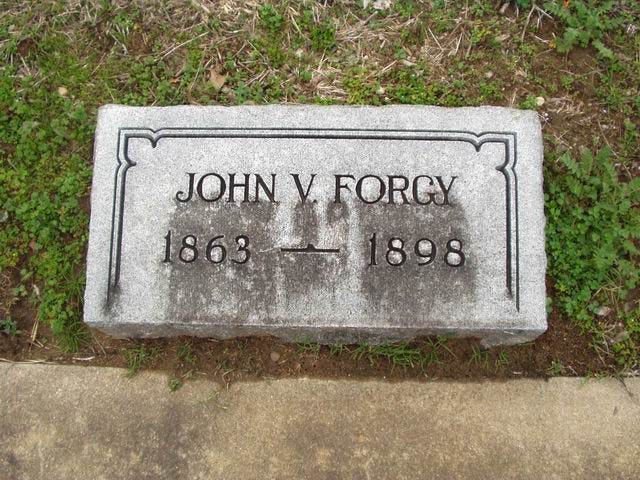
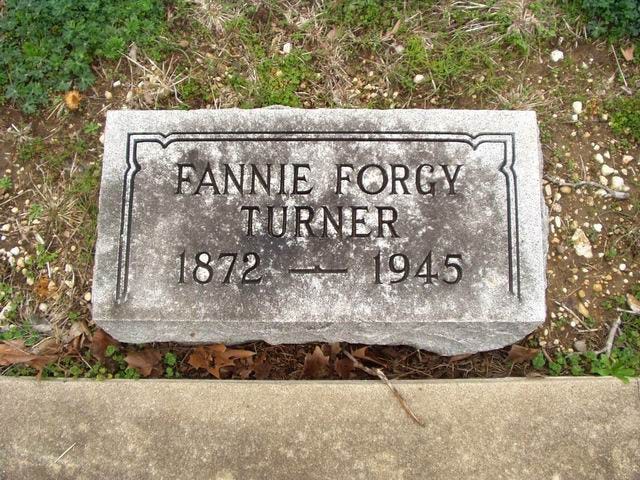
Then I found his stone. In the Odd Fellows Cemetery, Division C, a flat granite marker reads JOHN V. FORGY, with two dates, 1863 and 1898. A man born in 1863 was 35 in 1898, the right age to be rotund and genial in a boy’s memory, and he was dead the same year the Wrights moved to Main. Beside him, under a matching stone, lay Fannie Forgy Turner, who turned out to be Charles’s mother. I had the family. I still didn’t have a single line about John in the years Wright was talking about.
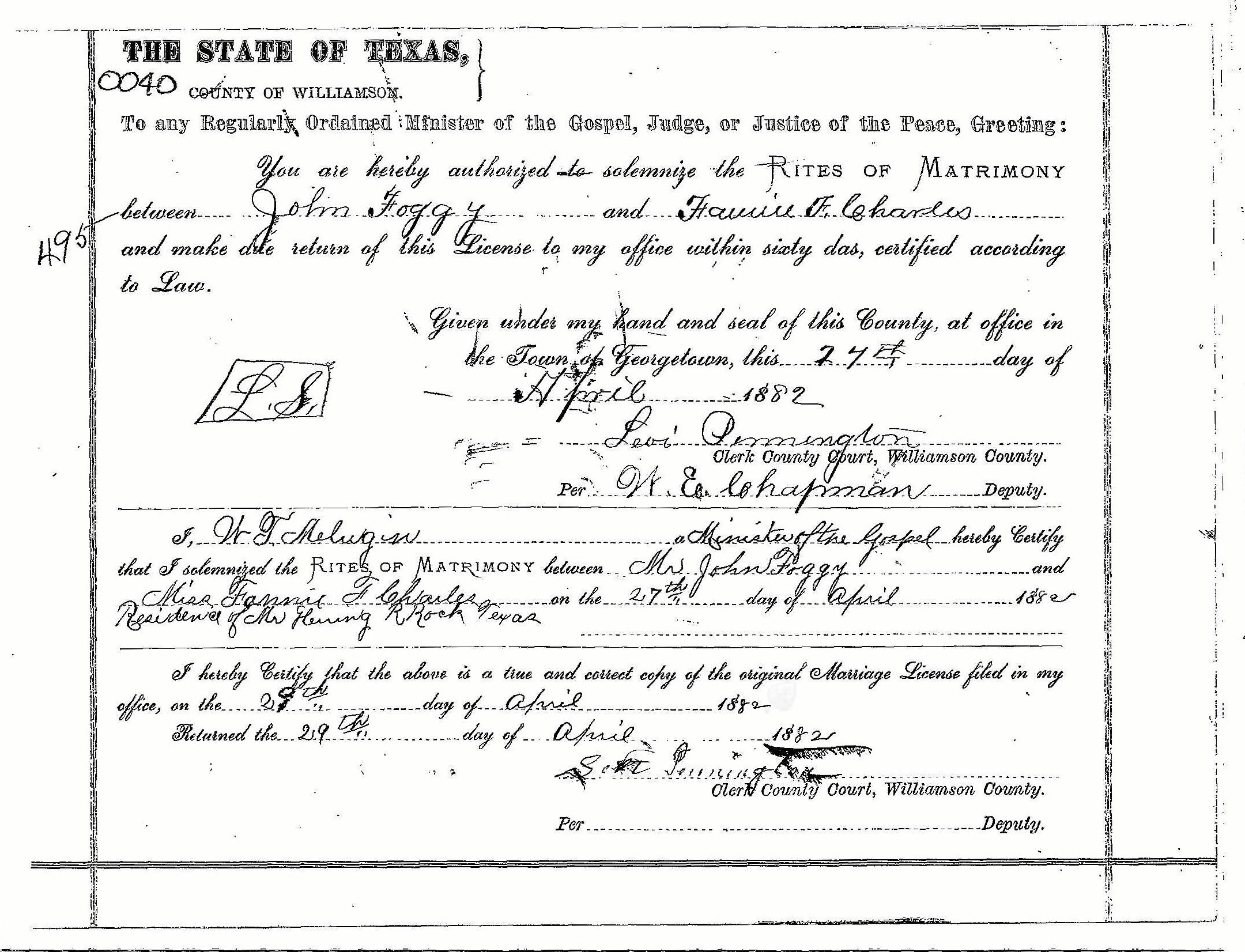
The second crack was the spelling. When I found John and Fannie’s 1882 marriage license, the county clerk had written the name twice, and both times he wrote Foggy. The Austin Statesman wrote Foggy in 1890. The Sun called him Foggy every time it mentioned him while he was alive. The family later spelled it Forgy, and so did Wright, and so did the stones. The paper, in his lifetime, never did. Once I searched for John Foggy, he came out of hiding.
A girl and a boy
John V. Forgy was born in Alabama in 1863. As a young man he drove stagecoaches “in various parts of the State.” On April 27, 1882, at a house in Round Rock, he married Fannie F. Charles, who was 14 or 15. By the summer of 1885 he was in Georgetown, 22 years old, “running an independent delivery wagon,” and that September the Sun noticed him “driving around in a bright, new wagon” built to carry “large freight or small packages.” He was a delivery man from his first month in town. By 1888 the paper was on joking terms with him: “A little son was born to Mr. and Mrs. John Foggy last Sunday morning. John says he is alright now, he has a girl and a boy.” In December 1889 the paper announced that “a prospective democratic voter” had arrived. That was how they announced the birth of Charlie.
In September 1890, a Jersey bull belonging to the Baptist pastor got Col. William Fleager down and was, in the Statesman’s words, “using him rough,” when “Mrs. John Foggy, wife of a near neighbor, went to his rescue, driving the bull away with rocks.” The colonel was badly hurt. Fannie, as far as the paper says, was fine.
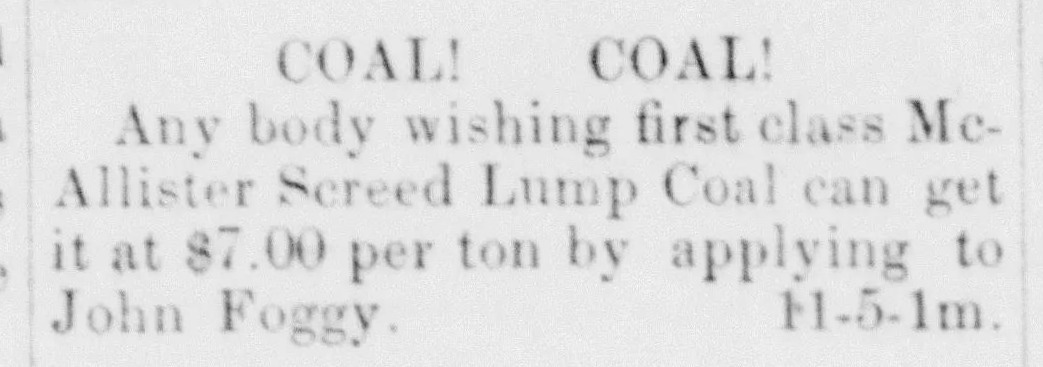
John hauled for a living. In November 1891 he advertised “first class McAllister Screed Lump Coal” at $7 a ton, apply to John Foggy.
He worked for McDougle & Booty, whose ads invited you to “look at our show windows and make selection of fancy groceries. Prompt delivery.” In July 1897 the town chose a janitor for the public school building from ten applicants, and John Foggy was elected unanimously on the first ballot at $30 a month. That September, 8-year-old Charlie was playing on the school grounds “of which his father is janitor” when a grazing horse kicked him in the face and knocked out four front teeth. In November John resigned the janitorship.
After that the paper goes quiet on him for more than a year. That year is 1898, when the Wrights were living in the 200 block of Main and a rotund, cheerful man was coming to their kitchen door.
The stone said 1898
The stone said 1898, so that’s where I looked for the end of him. All twelve months of that year’s Sun are online. I searched it under Forgy and Foggy and Fogy, Forgey and Forgie, Porgy and Vorgy, Odd Fellows and funeral, and Fannie by herself. Nothing. I was ready to write this piece ending at the headstone, with what became of him still a mystery, which is where Wright had left it.
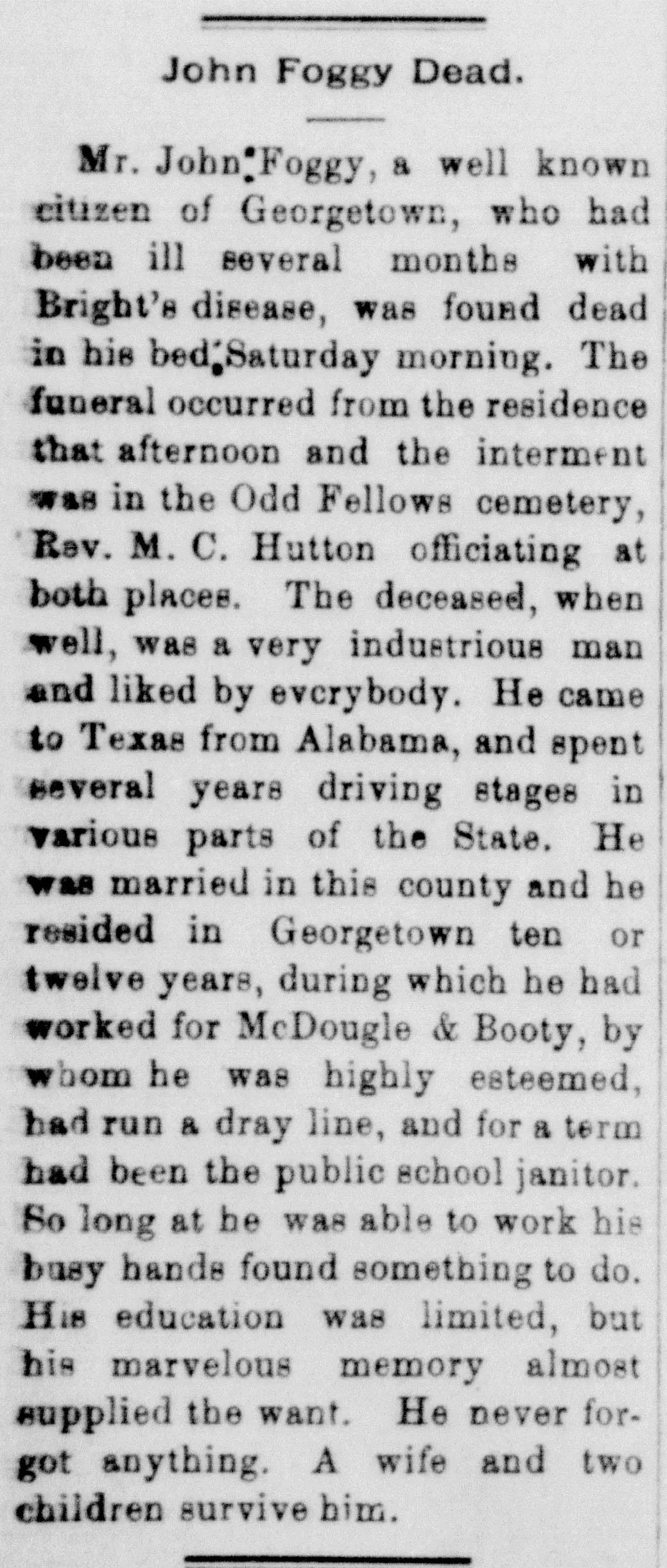
Then I searched for “janitor,” and the Sun handed me what I was searching for in their April 6, 1899 issue.
John Foggy Dead.
“Mr. John Foggy, a well known citizen of Georgetown, who had been ill several months with Bright’s disease, was found dead in his bed Saturday morning. The funeral occurred from the residence that afternoon and the interment was in the Odd Fellows cemetery, Rev. M. C. Hutton officiating at both places. The deceased, when well, was a very industrious man and liked by everybody. He came to Texas from Alabama, and spent several years driving stages in various parts of the State. He was married in this county and he resided in Georgetown ten or twelve years, during which he had worked for McDougle & Booty, by whom he was highly esteemed, had run a dray line, and for a term had been the public school janitor. So long as he was able to work his busy hands found something to do. His education was limited, but his marvelous memory almost supplied the want. He never forgot anything. A wife and two children survive him.”
He died on Saturday, April 1, 1899, at 35. The stone is a year off. It was cut decades later by people who were also five years off on Fannie’s birth, and nobody had reason to check.
Read the obituary again next to Wright. “His education was limited, but his marvelous memory almost supplied the want.” A man writing 72 years later, from a boyhood kitchen reminiscence: “What he lacked in letters he made up in memory.” Neither writer could have read the other. One knew him as a neighbor and the other as a boy, and they described the same man.
The last year fits too. Wright was 13 when John Foggy came to the door. Somewhere in the autumn of 1898 the man got sick and the rounds stopped, and a boy on Main Street never learned why. “Just what became of Mr. Forgy, we do not know!”
Orange Street
Fourteen months later, on June 13, 1900, the census taker came down Orange Street, which is 10th Street now, and found Fannie Foggy, 32, widow, dressmaker. She owned her house free of mortgage. She’d borne four children and buried two. Annie, 16, was apprenticed to a milliner. Charlie, 10, was in school. The families on either side were widows with daughters, sewing for a living.
Fannie married again, a man named Turner. In 1924 she was running the Farmers Lunch Room on North Brushy Street, meals 35 cents, board $5 a week, and signed the ad “Mrs. Fannie Foggy Turner.” She died in 1945 and was buried in Odd Fellows beside John, under a matching stone that reads FANNIE FORGY TURNER. She’d kept his name in the middle of hers for 46 years.
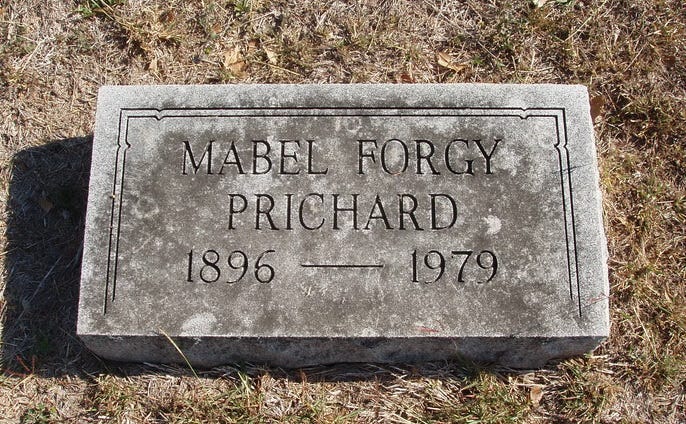
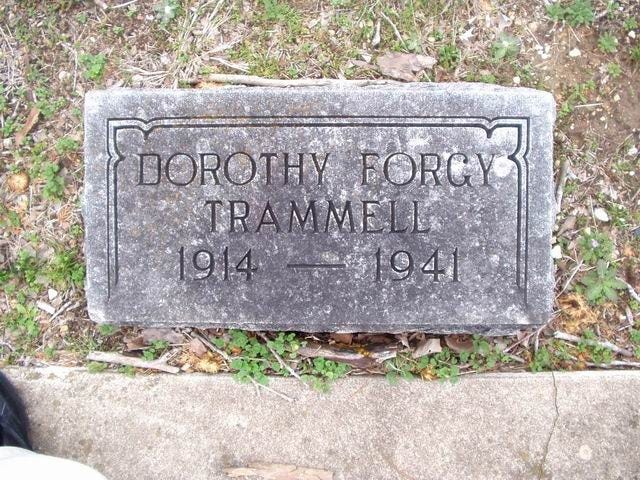
Charlie grew up here, married a Georgetown girl in 1912, and was brought home from Belton to be buried in December 1937. His obituary called him “a native of Georgetown.” He’s in the same plot as his parents, Division C, number 24, and so are his widow and his daughter Dorothy, both buried under the Forgy name. In the next plot over lies J. E. Cooper, who edited the Sun in 1885 and ran the item about a young man’s bright new delivery wagon.
Hamilton Wright never knew any of this. He carried a grocery solicitor’s name for 72 years without knowing what happened to him, and then he wrote it down. That’s the only reason anyone has to know John Foggy’s name today.
Wright ended his column, “We need more Forgies.” He was right. We need more Wrights, too. Somebody in Georgetown right now knows a Forgy that nobody has written down.
Sources
The Williamson County Sun
Hamilton Wright, “Grocery solicitor important Georgetown job in 1890s,” 4 February 1971, pp. 1 and 4.
Hamilton Wright, “Nostalgic beautiful recollection of hard but wonderful days in Georgetown,” 28 January 1971, p. 11.
Hamilton Wright, “Georgetown man boasted he had telephoned Little Rock,” The Sunday Sun, 29 May 1977, p. 12.
Hamilton Wright, “Trip to city park brings back memories,” The Sunday Sun, 11 December 1977, p. 4.
“Will We Have a Telephone Exchange?” (Communicated), 4 December 1884, p. 4.
“54 Years Ago” [reprinting the issue of 20 August 1885: “John Foggy is running an independent delivery wagon”], 18 August 1939, p. 1.
[Local item, John Foggy’s “bright, new wagon”], 3 September 1885, p. 3.
[Local item, “A little son was born to Mr. and Mrs. John Foggy”], 28 June 1888, p. 3.
[Local item, “A prospective democratic voter was born to Mr. and Mrs. John Foggy”], 19 December 1889, p. 4.
“Coal! Coal!” [advertisement, John Foggy], 12 November 1891, p. 4.
McDougle & Booty, reader advertisements [”fancy groceries. Prompt delivery”], 18 October 1894, p. 5.
[Proceedings, John Foggy elected janitor of the public school building], 15 July 1897, p. 1.
“Kicked By A Horse,” 16 September 1897, p. 1.
[Proceedings, John Foggy’s resignation as janitor accepted], 11 November 1897, p. 1.
H. Y. Allen, “Attention Please!” [advertisement], 4 August 1898, p. 5.
“John Foggy Dead,” 6 April 1899, p. 8.
“Changing Around,” 4 January 1900, p. 1.
H. Y. Allen, “If You Can Do Better Don’t Take Them” [advertisement], 1 November 1900, p. 8.
“Licensed to Wed,” 31 October 1912, p. 2.
The Farmers Lunch Room [advertisement, Mrs. Fannie Foggy Turner], 8 August 1924, p. 5.
Other printed sources
“Georgetown Topics,” Austin Daily Statesman, 6 September 1890, p. 1.
“Llano Man Dies As Niece Loses Control of Car,” The Austin American, 11 December 1937, p. 1.
“Llano Man Killed In Accident,” The Llano News (Llano, Texas), 16 December 1937, p. 1.
County and state records
Marriage license no. 495, John Foggy and Fannie F. Charles, issued at Georgetown 27 April 1882, solemnized at Round Rock the same day, returned 29 April 1882. Williamson County Clerk.
Standard certificate of death no. 58220, Chas. C. Forgy, Bell County, 10 December 1937. Texas Department of Health, Bureau of Vital Statistics.
Standard certificate of death no. 18380, Mrs. Fannie Turner, Williamson County, 5 April 1945. Texas Department of Health, Bureau of Vital Statistics.
1900 U.S. census, Williamson County, Texas, Precinct 1, Georgetown, enumeration district 123, sheet 18A, dwelling 343, family 348, Fannie Foggy household.
Cemetery records
Odd Fellows Cemetery, Georgetown, online plot map, Division C, plot 24: John V. Forgy, Fannie Forgy Turner, Charles C. Forgy, Mabel Forgy Prichard, Dorothy Forgy Trammel. Consulted 26 September 2026.
Find a Grave, memorials 8293694 (John V. Forgy) and 8293704 (Fannie Forgy Turner), Odd Fellows Cemetery, Georgetown.
Photographs
The Forgy stones, Odd Fellows Cemetery, Division C, plot 24, by John Christeson, Find a Grave.
Old Town Echoes is independently researched using primary historical sources. AI tools assist in drafting and editing; all content is reviewed, sourced, and verified by the author.