


On the evening of September 27, 1917, Mittie Ischy was standing on the front porch of her home, just west of the South San Gabriel River. One of her stepdaughters was with her. They were waiting for her husband Joe to come home for supper; he had been at work at his meat market in town.
They saw his car on the bridge. They recognized it. He was coming at a good pace.
Then, suddenly, the auto turned to the left.
They watched the car crash through the wooden railing and plunge to the bottom of the stream, about twenty feet below. They rushed to him. Joe had fallen clear of the car and was lying perfectly still on his face. When Mittie reached him, she raised his head and found that he wasn’t breathing. She tried to revive him, blowing in his face, desperately trying to restart respiration. It was no use.
Doctors later found that Joe’s neck had been broken, along with both arms and his collar bone. He was killed instantly by the fall. He was 45 years old.
We’ll come back to the scene at the bridge and its significance. But first, the house…
If you’ve driven down Austin Avenue in Georgetown’s Old Town, you’ve probably passed by 1604 without a second glance. From the outside, it looks like a typical Victorian cottage—pretty porch, unique shingles, the quiet charm of a modest 130-year-old home minding its own business.
This house has a story, though, and at the heart of it is the woman who was standing on that porch by the river. Her name was Mittie Pennington Ischy. She might still be here.
The Old Hodges Home


The house at 1604 was built in 1894 by Samuel Allen Hodges and his wife, Anna Pearl Montgomery. Sam was the nephew of prominent Georgetown builder Charles Sanford Belford, and the home is thought to be the oldest house attributed to Belford in the Belford Historic District, though no construction records have ever been found to confirm the connection definitively. The modest L-plan Victorian cottage was home to the Hodges family for almost 20 years. Sam and Anna raised two children there: Leland, who grew up to become an architect, and Elizabeth, who was born in the front bedroom and grew up to be a well-known teacher at Georgetown High School. By 1923, the family had moved next door to a new home at 1602 Brushy Street that Leland had designed for his parents. (The city changed the name of Brushy Street to Austin Avenue in 1934.)
After the Hodges left, 1604 spent the next two decades or so occupied by renters. The house was waiting for its next real owner. She arrived in 1944.
A Pioneer’s Daughter
Mittie Elizabeth Pennington was born on May 8, 1878, right here in Georgetown, to a family whose roots ran deep. Her father, John Parker “Jack” Pennington, was the kind of man they put historical markers up for (and they did, you can find the Pennington Family Cemetery marker east of Georgetown at the intersection of Founders Oak Way and Pennington Lane). Born during the Republic of Texas period, Jack had lived as a young man in Arizona Territory, where he was among the first families to settle and where he survived several deadly encounters with the region’s Native Americans. He fought in the Civil War then moved to Texas in 1867.
Jack’s first wife and Mittie’s mother, Emily Jane McAllister, died in 1880. Mittie was just two years old. Jack remarried, had two more children, and the family continued their lives on their Georgetown farm.
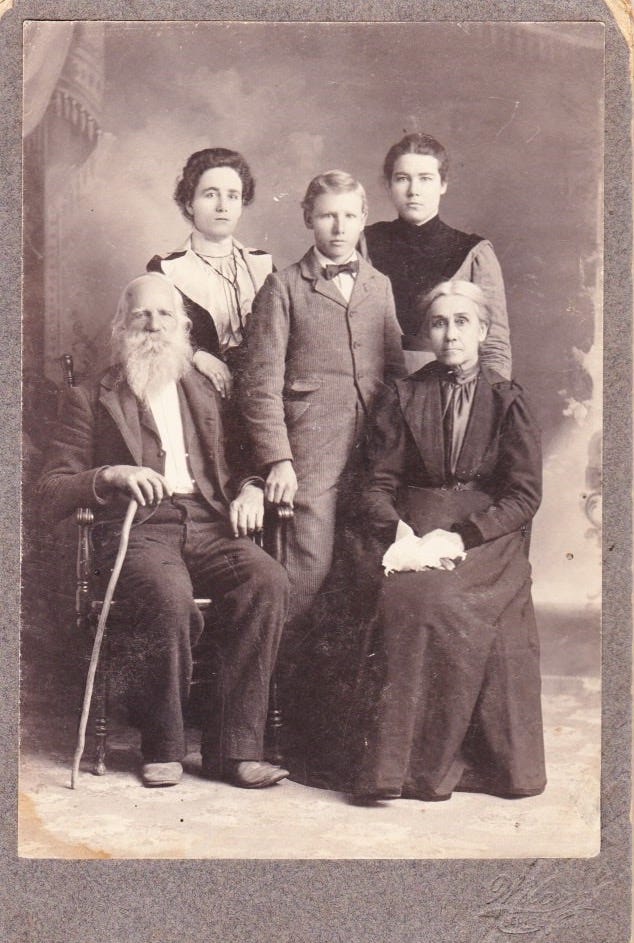
By the mid-1890s, Jack Pennington had spent a decade going blind from cataracts. The man who had survived the Arizona frontier and the Civil War was losing the world, one shade at a time. Jack did undergo an eye operation in Austin, but it proved unsuccessful.
Jack appeared to make peace with it. He taught himself to navigate the Georgetown farm by memory and feel, tracing fence lines with his hands, following familiar structures, even wandering over to the neighbors, who thought him jolly and congenial as always.
But on the night of November 30, 1904, after spending a pleasant day with his family, Jack quietly took his bed sheet and groped his way to the corncrib in the barn. He climbed onto the thick rim of a wooden trough, knotted one end of the sheet around a rafter and the other around his neck. Then he jumped. His wife found him hanging there in the morning.
Mittie was 26 years old. The daughter who had lost her mother before she could remember her was now without her father, too.
For the next several years, Mittie’s life becomes quieter in the historical record, which, to a genealogist, suggests a single woman getting on with the business of supporting herself. By 1910, a directory finds her in Corsicana, Texas, working as a telephone operator. In an era when “spinster” was less a description than a verdict, Mittie seemed to be making her own way.

A Surprise Wedding and an Instant Family
Joe Ischy was a well-known Georgetown businessman who owned and operated the City Meat Market. He was Swiss-born, respected, and by all accounts a good man. He was also a man who had been dealt a brutal hand.

Joe’s first wife, Ida, died in 1913, leaving him a widower with four young children. Then in 1915, his youngest daughter, three-year-old Irene, died of diphtheria. The Williamson County Sun noted “the whole community sympathizes with him.” Joe Ischy was a man who knew loss. So, perhaps it makes sense that he and Mittie found each other.
In June of 1916, Joe surprised his friends by taking “unto himself a better-half,” as the Sun cheerfully reported. Attended by his brother Ernest and Ernest’s wife, Joe and Mittie went to Austin “overland” and were married. “Hosts of friends of both parties, including The Sun, extend hearty congratulations.”
Just like that, Mittie went from being a single woman, likely considered well past marrying age by 1916 standards, to a wife and mother of three: Alma Louise, 17; Myrtle, 13; and Phillip, 10. After years of quiet independence, she suddenly had a full house, a husband, and a whole new life.
It lasted fifteen months.
That brings us back to the bridge. We stood on the porch with Mittie in the opening of this story and watched it happen.
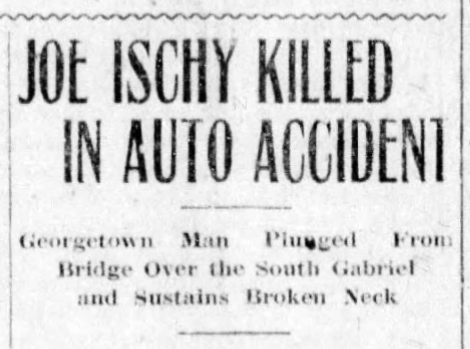
But what was happening in the months before that evening on the bridge? What might probate files and deed records reveal about the Ischys’ home and financial situation? Where was that bridge? These are just some of the questions I’ll dive into next week. In the meantime…
The House at 1604
In 1944, at the age of 66, Mittie left the homestead west of town where she had lived since her marriage to Joe. She purchased the home at 1604 South Austin Avenue and became the first owner since the Hodges family to actually live in it.
She made it her own, converting the Victorian cottage into a duplex. She lived in the south portion of the home and rented out the north side. The home had two kitchens, only one bathroom, and some creative plumbing to make it all work. Mittie’s kitchen occupied the room that had once been young Elizabeth Hodges’ bedroom (and is now the primary bathroom). In fact, a cabinet in the now-bathroom has shelves with pie safe doors, a remnant from when the room was Mittie’s kitchen and the cabinet her pantry.
It was a practical arrangement for a practical woman. Mittie lived at 1604 for the last 22 years of her life. Whatever she carried from that homestead by the river, she carried it through the front door of 1604 and into the rooms where she would spend the rest of her days.
A House That Keeps Changing Its Mind
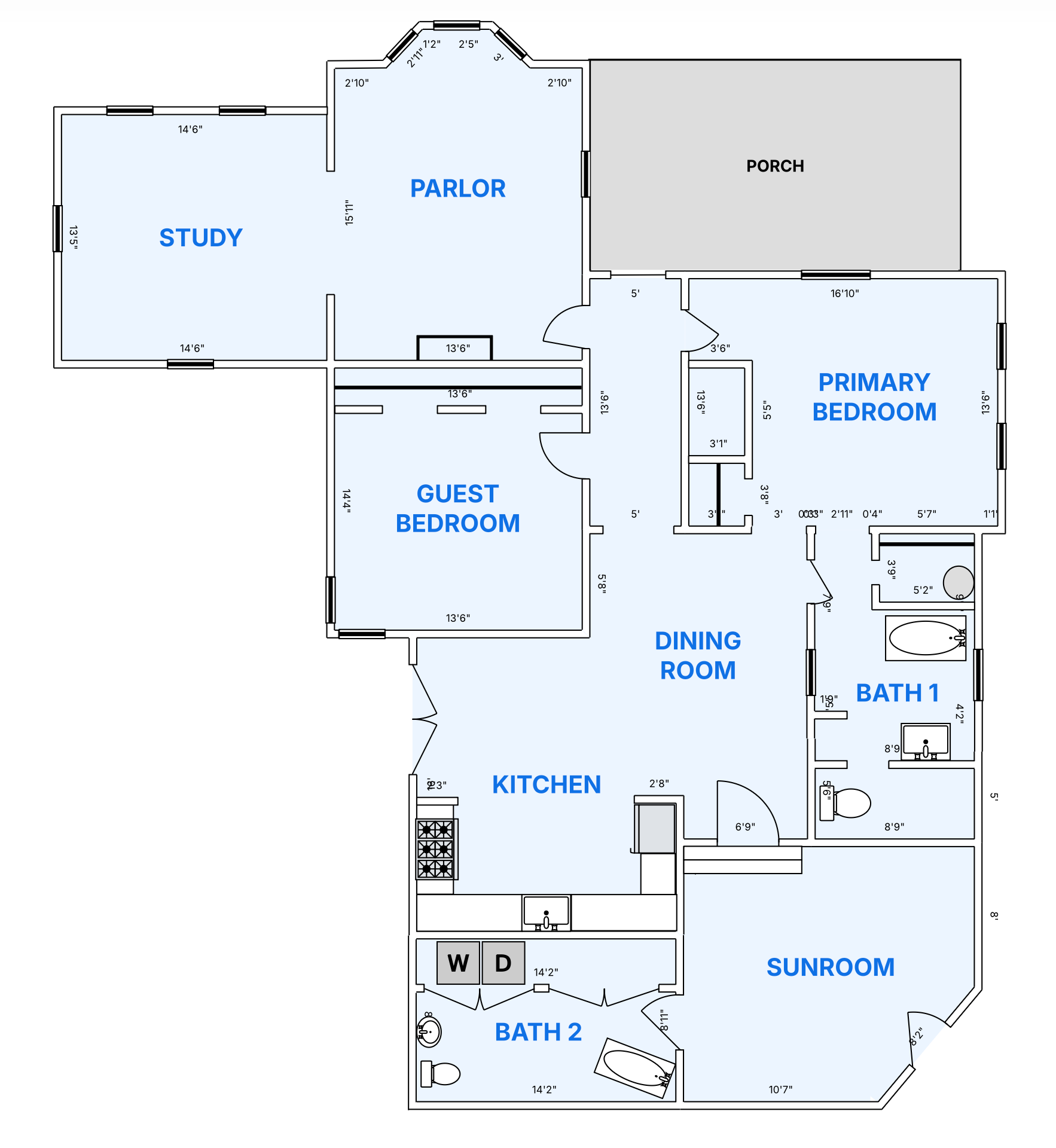
One of the things I’ve been fascinated about with 1604 is how the changing floor plan tells the story of the people who lived there; the walls themselves are a kind of autobiography.
1894: The Original Hodges Home When Sam and Anna built the home, it was a straightforward L-plan Victorian cottage: a parlor and study at the front, a dining room, the Hodges’ bedroom, a kitchen at the back, and a rear porch; simple, modest, and solidly built.
A note on the following floor plans: no dated architectural drawings exist for 1604, so the layouts shown here are my own creation. I built them from undated floor plans in the property records, from physical clues still visible in the house, and from the stories of the people who lived here. They are my best interpretation of how the home changed over 130 years. Where the evidence left gaps, I filled them with educated guesses.
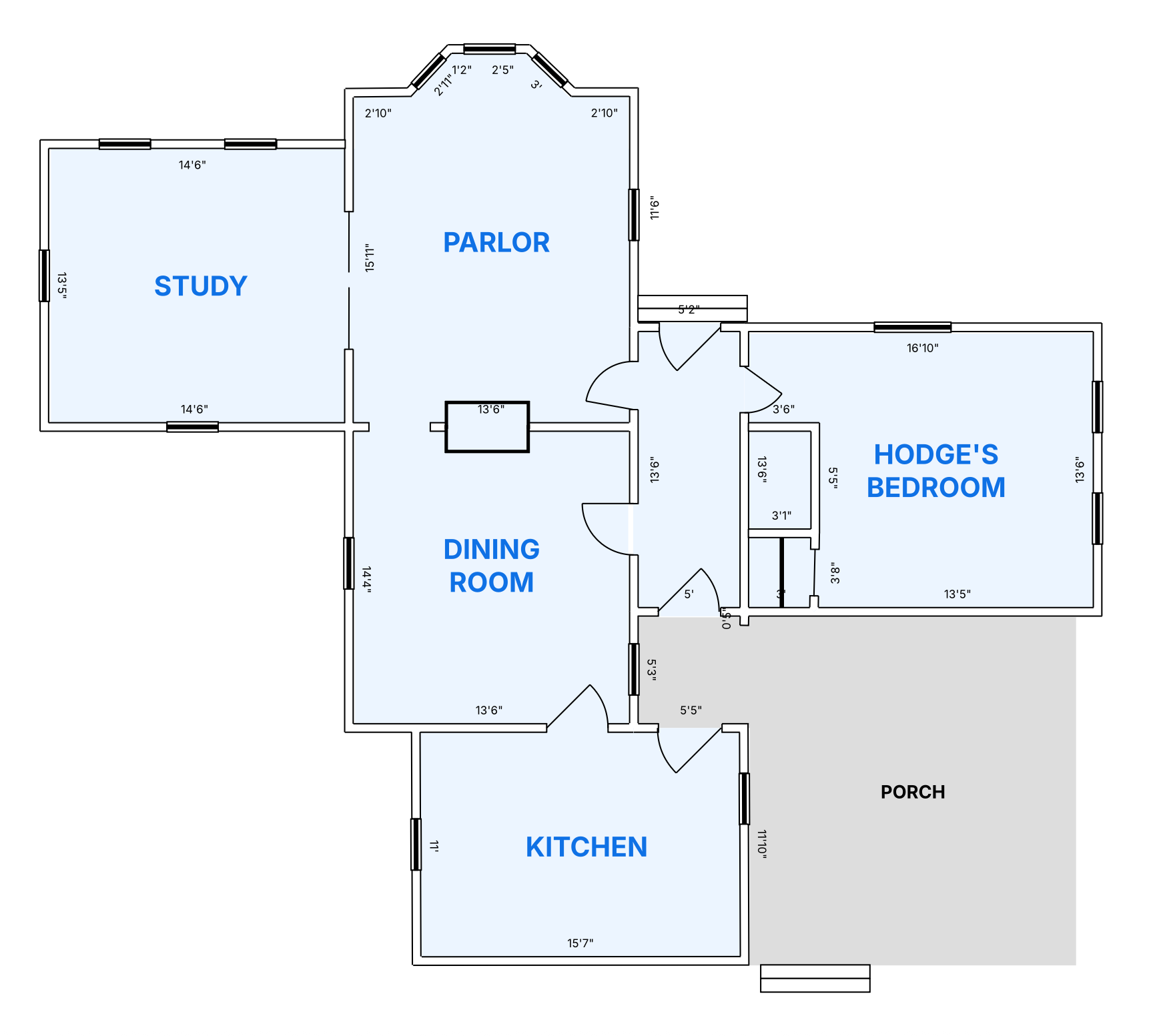
1919: The Belford Remodel The Hodges family contracted with Belford to add a new front gallery, a sleeping porch, and an extended kitchen.
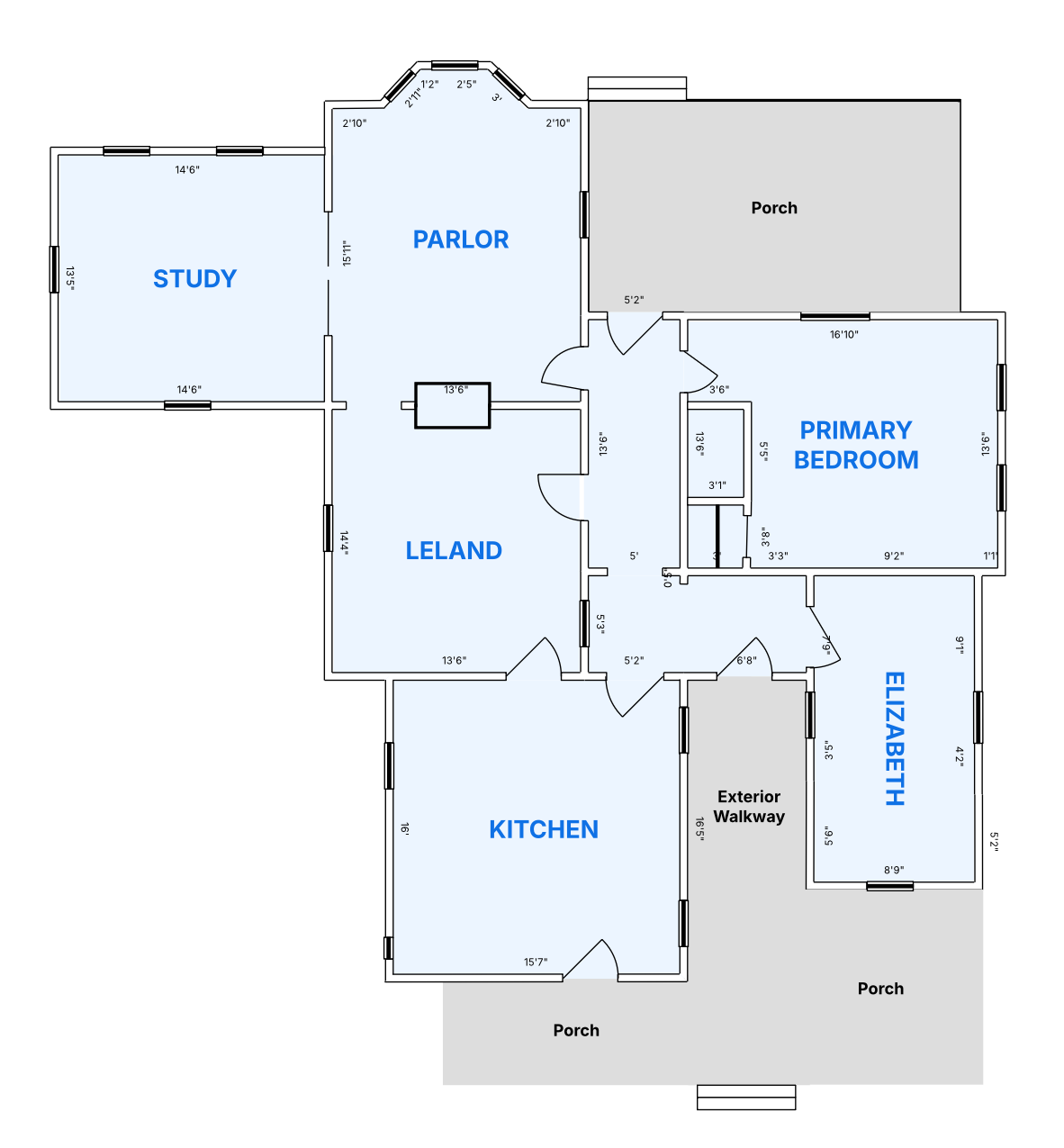
1940s: The Ischy Duplex This is Mittie’s chapter. The house is divided, with two kitchens and a shared bathroom.
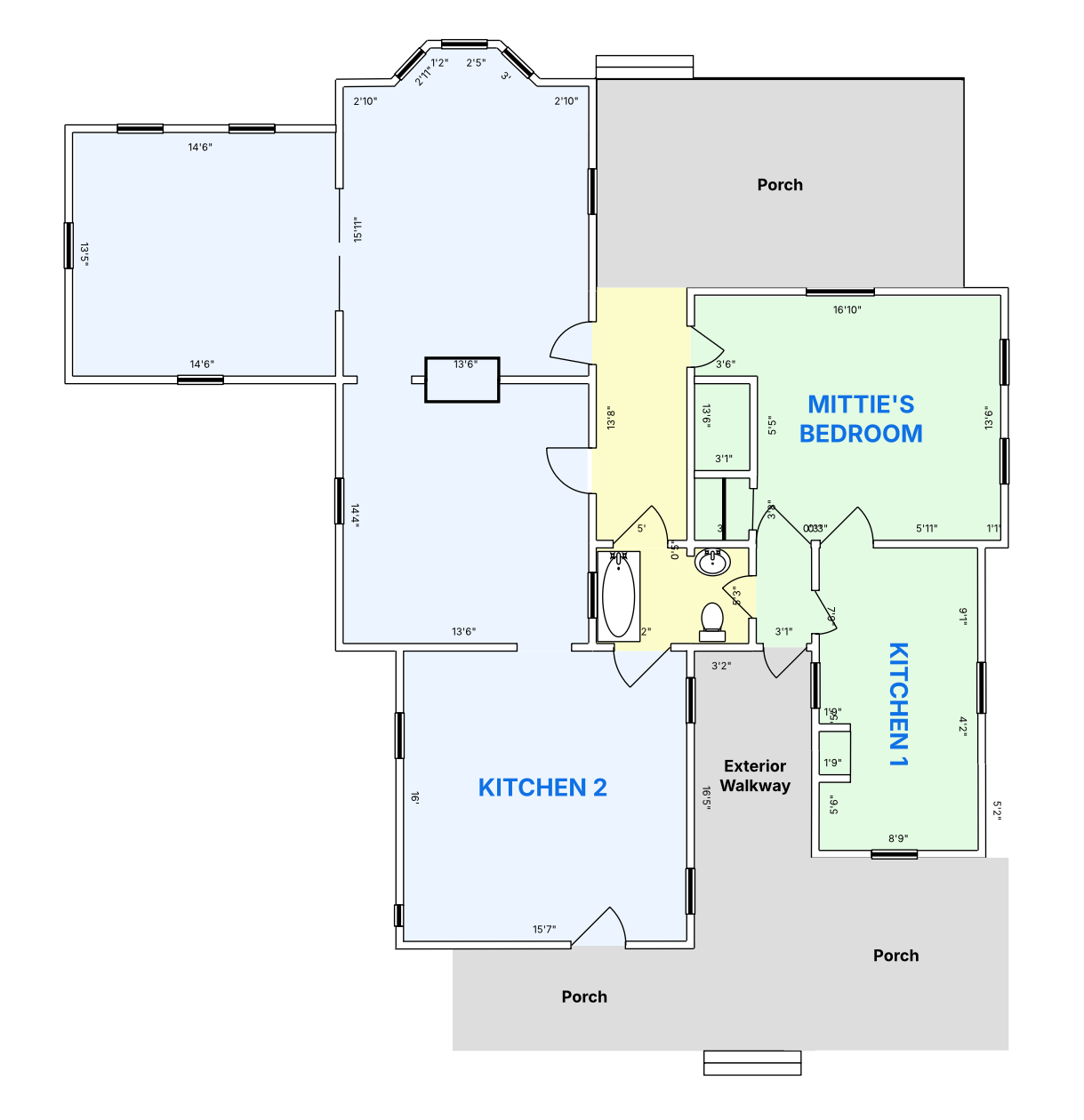
1970s: The Lewis & Rambo Remodels After Mittie’s death in 1966, the house sat empty and was used for storage until John and Patricia Lewis purchased it in 1971. The Lewises converted it back into a single-family home.
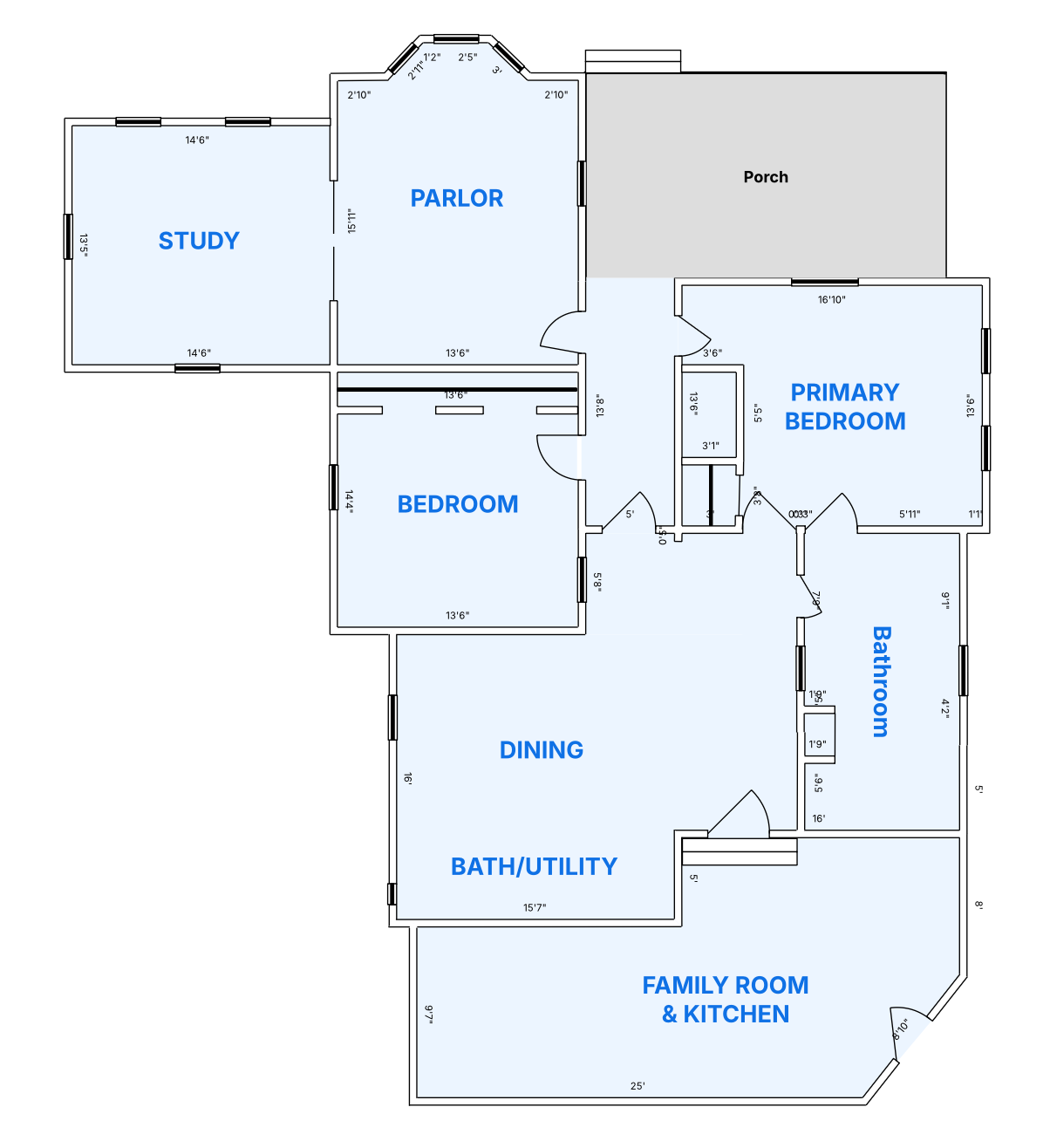
Present Day The home continues to evolve. A sunroom, a guest bedroom, and two bathrooms now occupy spaces that have served half a dozen different purposes over 130 years. But the bones are still there.
The Ghost in the Mirror
Now, I did promise you a ghost story, and I am not one to leave tea unspilled.
There’s an antique mirror on the wall in the study. The current owners say it came with the house. They told the story of a guest staying in the study, which was a guest room at the time.
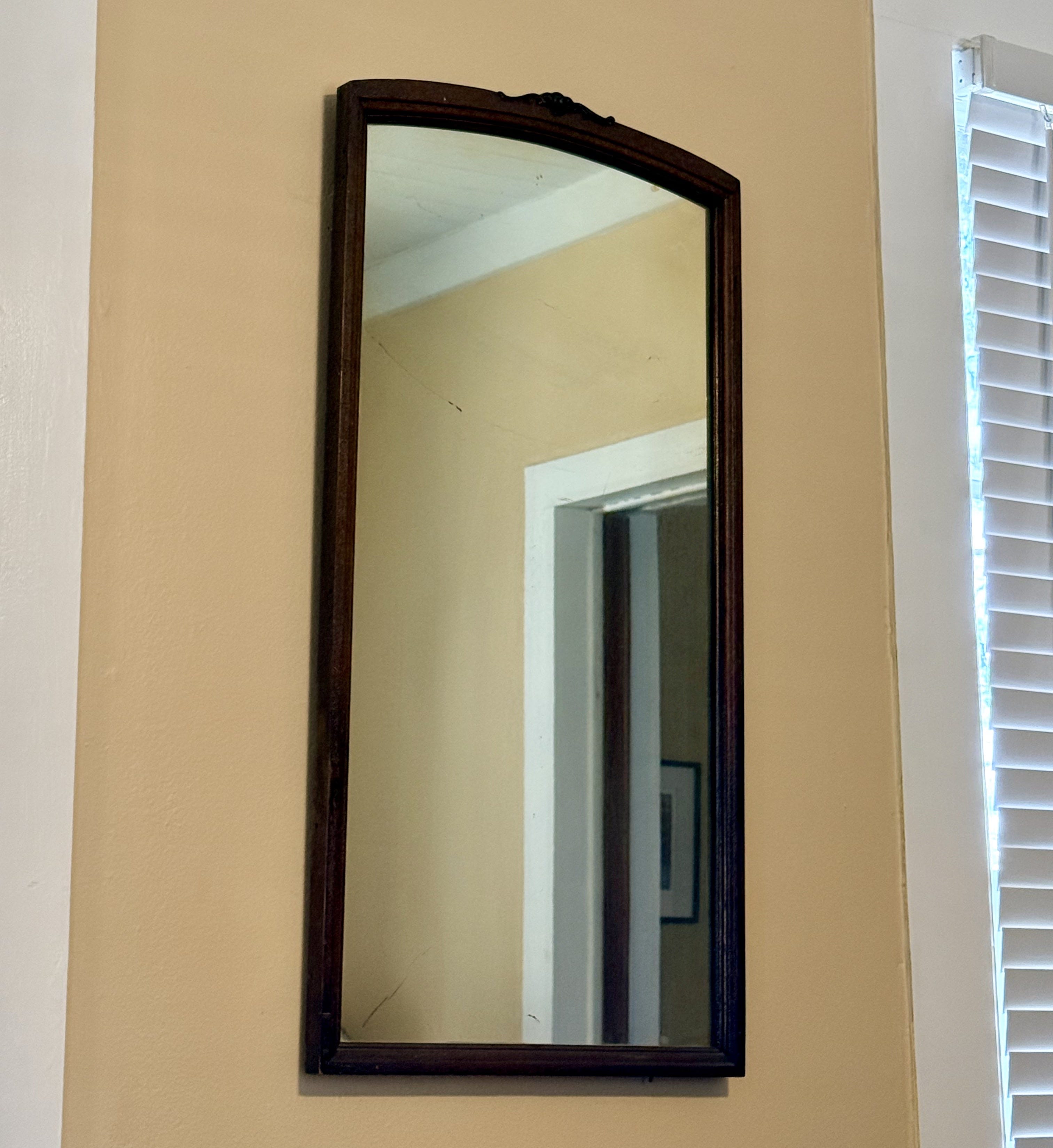
One morning, the guest was found sound asleep on the sofa in the parlor. When asked why he’d moved, he reported that he couldn’t sleep because he kept dreaming of a woman standing over him, insisting that he “put it back” over and over. He finally gave up and moved to the sofa, where he slept fine.
His host put two and two together pretty quickly; she’d just moved that mirror out to the carriage house. She went and got it and put it back.
I’m a genealogist, not a ghost hunter. I deal in documents, not the paranormal. I also happen to be living at 1604 currently.
The mirror is still on the wall in the study. I haven’t moved it. I will not be moving it.
I don’t know who the woman in the dream was, but it seems that someone in this house has strong feelings about where the mirror belongs. She also seems to have other… opinions.
It started with my desk. One day, my dogs were barking at some street noise they found objectionable, which is a frequent occurrence on Austin Ave. Suddenly, my desk jolted like something had slammed into it from underneath, hard enough that my first thought was that a desk leg had broken through one of the old floorboards. I crawled around, inspected every inch, and I couldn’t find a single explanation. The dogs, for the record, were unmoved.
I was folding laundry one evening in our bedroom (which also happens to have been Mittie’s bedroom, too, by the way). Two dogs were with me and one was in the parlor. The bedroom door rattled in its frame, the familiar jiggle of a dog nudging a closed door because she wants in. I didn’t immediate respond, and it rattled again, a dog impatient to gain entry. Except I went and opened the door… to an empty hallway. The third dog was sound asleep on the sofa in the parlor.
Then there’s the music situation… When our wireless speakers are played at a high volume, the music distorts and then cuts out entirely. During one loud music episode, right as the music killed itself, there was a loud, sharp bang at what sounded like the front door, but no one was there.
Apparently, someone prefers quiet.
One night, while sleeping in the guest room with all three dogs and the door closed, our housesitter was woken around 4 a.m. by a loud thud somewhere in the house. The dogs barked, but she decided she was not investigating at 4am. The next morning, she found a large ceramic candleholder that had been sitting on a side table in the parlor knocked to the floor and shattered in a room that had ostensibly been unoccupied by humans or animals all night.
One of the most dramatic incidents happened in the primary bathroom, which was once Mittie’s kitchen. A visitor used the restroom, and a good thirty seconds after she had gotten up, flushed, and moved to the sink to wash her hands, the bathroom trash can, which had been sitting on the back of the toilet, flew off the toilet. It didn’t fall, and it didn’t tip; it launched itself with enough force to fling its contents across the toilet and into the shower stall.
My guest was... unsettled, to say the least. I couldn’t blame her.
Still Her House?
It’s noteworthy that all of these incidents happened in a house where a woman lived for 22 years, a woman who had already spent a lifetime enduring loss after loss, who divided this home in half to share it with tenants, who took care of her space and likely made sure her tenants also treated her home with respect. And maybe she’s still watching over 1604, keeping us in line.
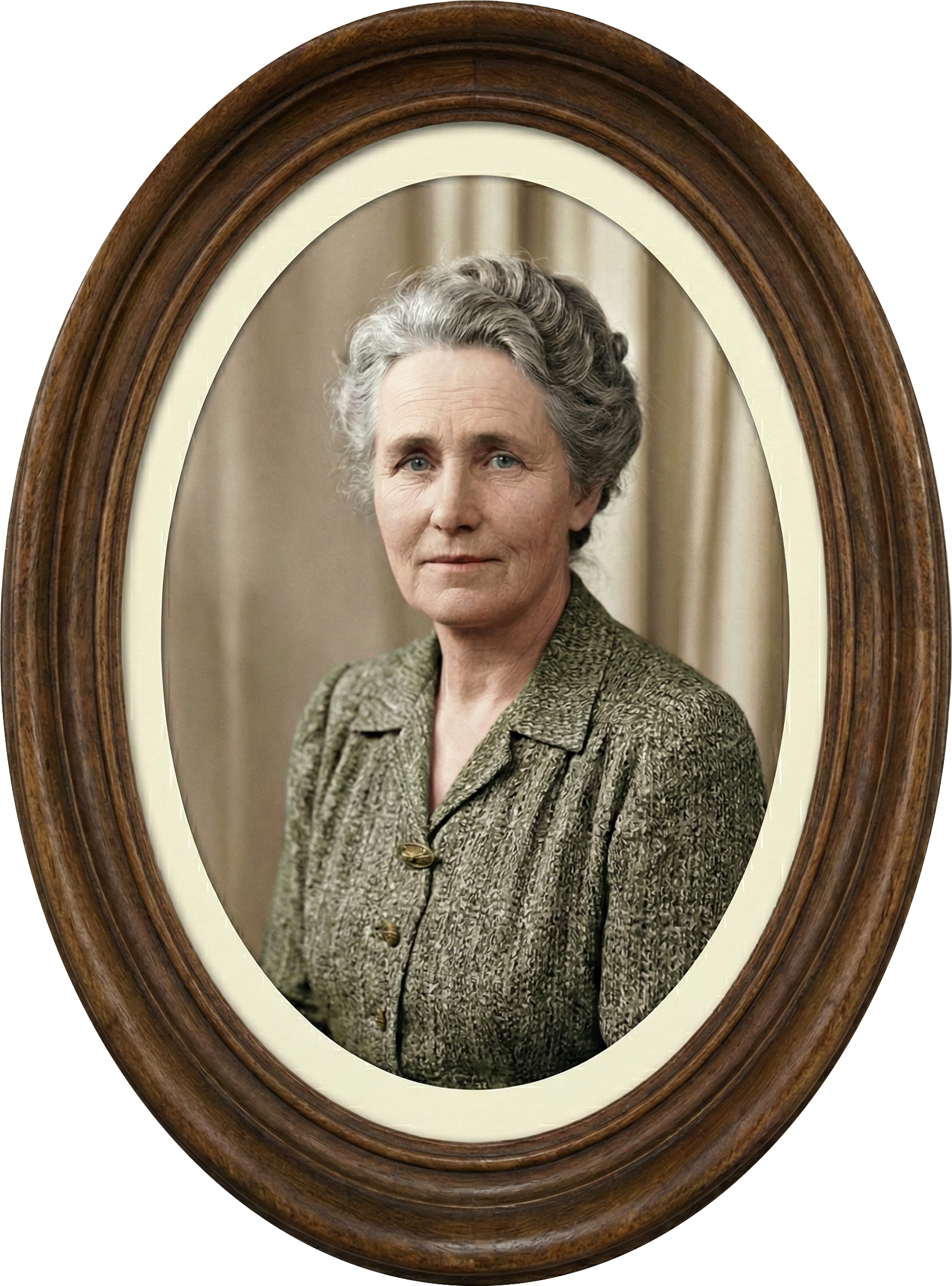
I’m not sure that the ghost of 1604 Austin Avenue is Mittie Pennington Ischy, but if I were a ghost and I’d spent the last 22 years of my life dedicated to looking after my home and its residents, I might decide to stay in that home, too.
Maybe she just wants it known that this is still her house. After everything she went through, I'm okay with that. I like the peace and quiet, too, Mittie.
If you happen to pass by 1604 Austin Ave, give a nod to Mittie. She earned it. Just maybe keep the volume down.
More to the story
What’s the story behind the old homestead where Mittie was standing the day Joe died, where she lived until she moved to Austin Avenue in 1944? Next week, we'll follow the paper trail that Mittie and Joe left behind: probate files, deed records, and a 1916 map that reveals where that bridge actually stood. The records raise questions about what was happening in the Ischy household in the months before that September evening, questions that, more than a century later, still don't have easy answers.
Thanks for reading Old Town Echoes! Subscribe for free to receive new posts and support my work.
Sources & Research Notes
The Pennington Family
Virginia Culin Roberts, With Their Own Blood: A Saga of Southwestern Pioneers (Fort Worth: Texas Christian University Press, 1992).
“Pennington Family Cemetery,” Texas Historical Commission historical marker (1998), intersection of Founders Oak Way and Pennington Lane, Georgetown, Williamson County, Texas.
Corsicana, Texas, City Directory, 1910; Mittie Pennington, telephone operator; image, "U.S., City Directories, 1822-1995," Ancestry (ancestry.com : accessed 20 February 2026).
Joe Ischy’s Life and Death
“Ischy–Pennington,” The Williamson County Sun (Georgetown, Texas), 15 June 1916, p. 3; digital image, Newspaper Archive (newspaperarchive.com : accessed 20 February 2026).
“Little Irene Ischy Dead,” The Williamson County Sun (Georgetown, Texas), 24 June 1915, p. 3; digital image, Newspaper Archive (newspaperarchive.com : accessed 20 February 2026).
“Auto Plunges from Bridge; Joe Ischy Killed Instantly,” The Williamson County Sun (Georgetown, Texas), 27 September 1917, p. 9; digital image, Newspaper Archive (newspaperarchive.com : accessed 20 February 2026).
“Joe Ischy Killed in Auto Accident,” Taylor Daily Press (Taylor, Texas), 28 September 1917, p. 1; digital image, Newspaper Archive (newspaperarchive.com : accessed 20 February 2026).
The two newspaper accounts of Joe’s death differ slightly in their details; I drew from both to reconstruct the events of that evening.
Mittie Pennington Ischy
"RADER-ISCHY," San Antonio (Texas) Express-News, 21 August 1920, p. 7, col. 1; digital image, Newspapers.com (newspapers.com : accessed 24 February 2026).
“Mrs. Mittie Ischy Dies Saturday; Rites Sunday,” The Williamson County Sun (Georgetown, Texas), 3 November 1966; digital image, Newspaper Archive (newspaperarchive.com : accessed 20 February 2026).
Texas Department of Health, Bureau of Vital Statistics, certificate of death no. 70266, Mittie Pennington Ischy, 29 October 1966; image, "Texas, U.S., Death Certificates, 1903–1982," Ancestry (ancestry.com : accessed 20 February 2026).
History of 1604 Austin Avenue
Williamson County, Texas, deed records. Sam A. Hodges from J. H. Hodges, lot in Block 78, recorded August 1894.
Belford Lumber Company ledger, 1919 entry for S. A. Hodges; notes specify work for new front gallery, sleeping porch, and extended kitchen. Held by Southwestern University Distinctive Collections, Georgetown, Texas.
“Belford Historic District,” National Register of Historic Places nomination packet (1985), continuation sheet, p. 78. Published online by the Texas Historical Commission, Austin; https://atlas.thc.texas.gov/.
Texas Historical Commission, survey form for 1604 Austin Avenue (Survey ID: 125373), recorded 2007, updated 2016.
Elizabeth Hodges Sanford, interview/research notes, 1979; transcribed in research files for the Georgetown Heritage Society.
Ghost Stories
The mirror incident was related to me by the owner of 1604 Austin Avenue. All other experiences described are my own or were reported to me firsthand by my guests.
Old Town Echoes is independently researched using primary historical sources. AI tools assist in drafting and editing; all content is reviewed, sourced, and verified by the author.
Love it!!
Wow, fascinating and great story telling. If candles and other items are getting tossed around though, you might not want to trust that a lamp filled with kerosene 🤣will stay put!