


One night in May of 1910, the St. Cecelia Club put on a three-act comedy in Georgetown. There was a stage, fitted up for the occasion. There were curtains, newly hung. There was a special orchestra, reserved seats at 25 cents, and room, by the proprietor’s count, for about a thousand people.
There was no roof.
The play went up at the Airdome, an open-air theater on the north side of the courthouse square, where the audience sat behind a twelve-foot galvanized fence with the spring sky for a ceiling. The proprietor, a Georgetown man named Dave Goodlett, gave the use of the house for free.
Everyone knows the Georgetown Palace Theatre. It’s been Georgetown’s theater for a century, and its distinctive Art Deco marquee on Austin Avenue is hard to miss.
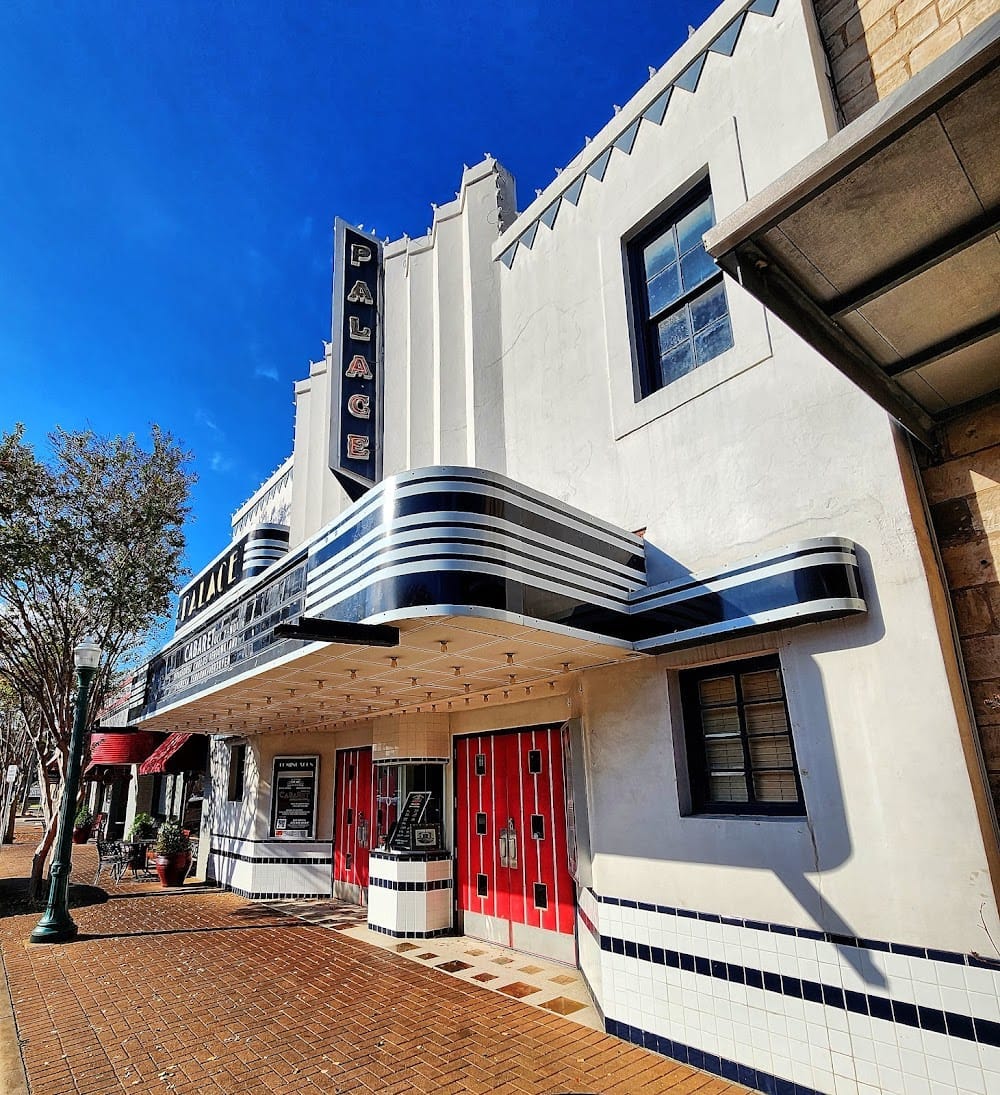
But the Palace didn’t open until 1926, and by then Georgetown had been putting itself in front of a stage, or a screen, or both, for forty years: in an opera house that ended up full of horses, in a school auditorium, behind canvas, behind a fence, and out under the open sky.
This week we’re raising a glass to the many theaters of Georgetown.
The Opera House
In October of 1884 the Georgetown Opera House Company organized itself, hired Whittle & Harrell to build, and put the entrance on Brushy Street (that’s the street you know as Austin Avenue; it didn’t get that name until 1934), at the south end of the same block where the Palace sits today.
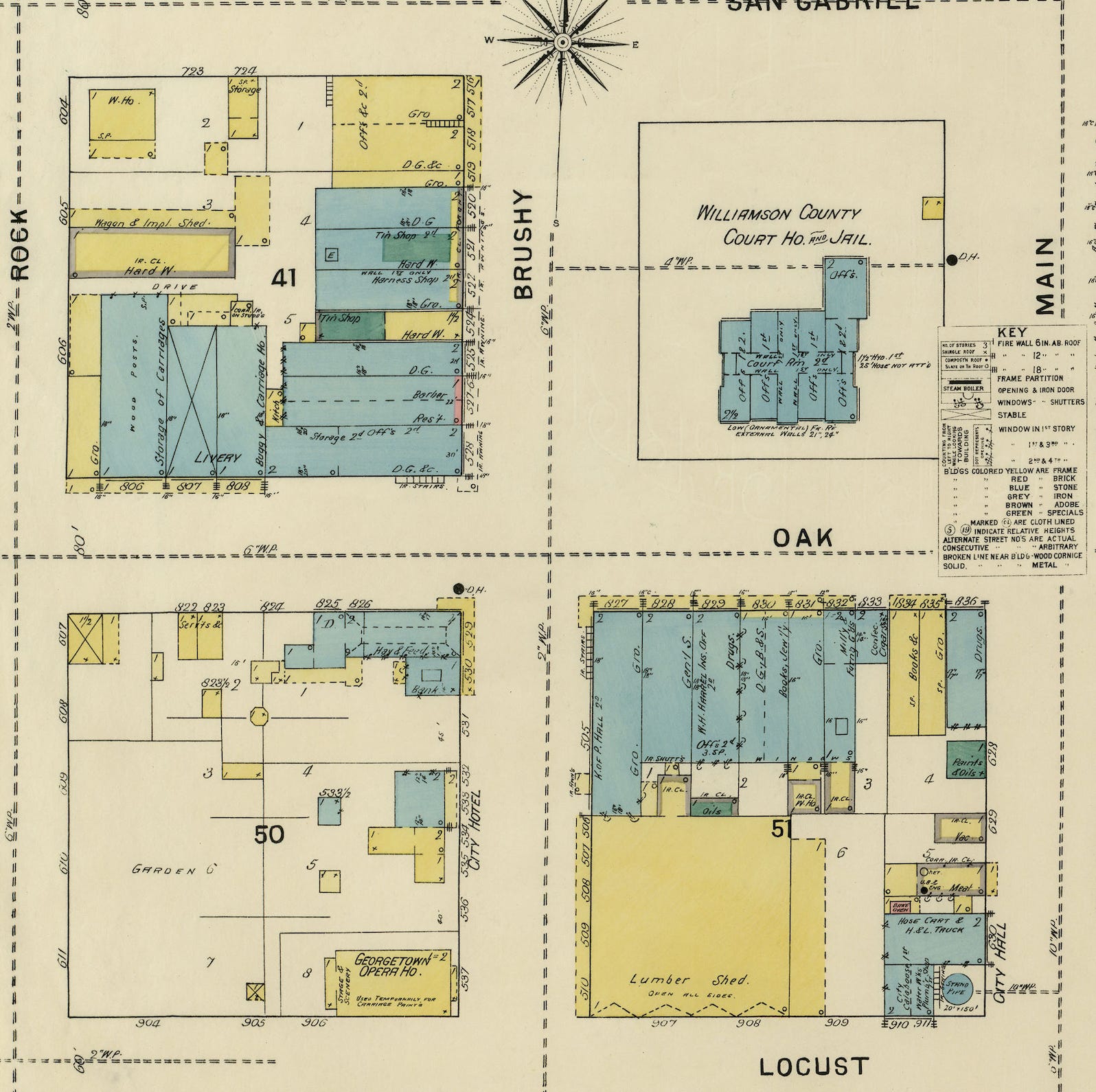
It had two hundred opera chairs, scenery from Chicago, and work “pushed forward as rapidly as possible.” Not everyone celebrated. Before the walls were even up, a letter to the Sun signed “Fogy” quoted John Wesley on the subject of play-houses: they “sap the foundation of religion,” they are “peculiarly hurtful to a trading city,” and they draw “drinking and debauchery of every kind.”
The opera house opened anyway, and by the next spring it was already moonlighting as a skating rink; the Sun noted that few were disturbed by the noise of the skates. Then came more than a decade of traveling troupes, not all of them cozy. In December 1895 a “rollicking comedy” called Our Country Cousin played to a frigid temperature “in and out of the house.” And by then the hall was working odd jobs between bookings: when the Sanborn insurance mappers drew it in 1894, stage and scenery still in place, they noted it was “used temporarily for carriage paint’g.”

In September 1896 the paper reported, in one line, that “the old opera house has been turned into a livery stable.” The horses didn’t get it all at once; that December a company was booked back in with a comedy called A Yankee Drummer. But the next year the city council granted stable sheds on the opera house lot, and by 1900 Nowlin & Morse were advertising “The New Livery Stable in Old Opera House.”
By 1901 the Sun had seen enough. A February editorial titled “An Opera House Needed” counted more than a hundred Georgetown people riding special trains down to Austin to see plays and asked why their money couldn’t stay home. The Odd Fellows answered: a committee formed, “the money is in hand,” and by May the lodge had resolved to erect a three-story stone building with its entire second floor an auditorium. If an audience ever filled that second floor, nobody seems to have written it down where I could find it.
Moving Picture Show Arrives
March 21, 1907, in the Sun: “Dave Goodlett and Fred Bredthauer are getting ready to open up a moving picture show in the Eidman building and expect to run it all summer.”
The Eidman building was a two-story stone building on the corner of East 8th and Church. That corner is 600 Degrees Pizzeria now, across 8th from City Post. The stone building itself is long gone, but that’s the spot where Georgetown’s movies began.
Bredthauer tried everything once. He’d been a hardware clerk and a groceryman, he stood his father’s prize stallion at a livery stable, and after the movies he went into dairy farming. Dave Goodlett was the opposite kind of man. In 1903 he was carrying mail on a rural route out of Georgetown. In 1907 he found the moving picture business, and he never let go of it.
The first season set the pattern for everything after. On May 2, 1907, the partners ran a show at the public school auditorium as a benefit for the fire department. By July the show had moved outdoors to the north side of the square, advertising itself as the “largest canvass and coolest place in town.” In August a fire that started at a chili stand destroyed an 1853 stone law office next door and took the canvas side of the picture show with it; the partners’ loss came to about $40. They kept showing.
The Airdome
In April 1908 the show got its name. “A Race for a Million at the Airdome tonight,” said the Sun, and a week later: “Get the habit; visit the Airdome.” The canvas walls became a twelve-foot iron-clad board fence, admission held at a nickel and a dime, children under five free, and Goodlett’s ads made his philosophy a slogan: Children were “Welcome as the flowers in May. My motto: to please.”
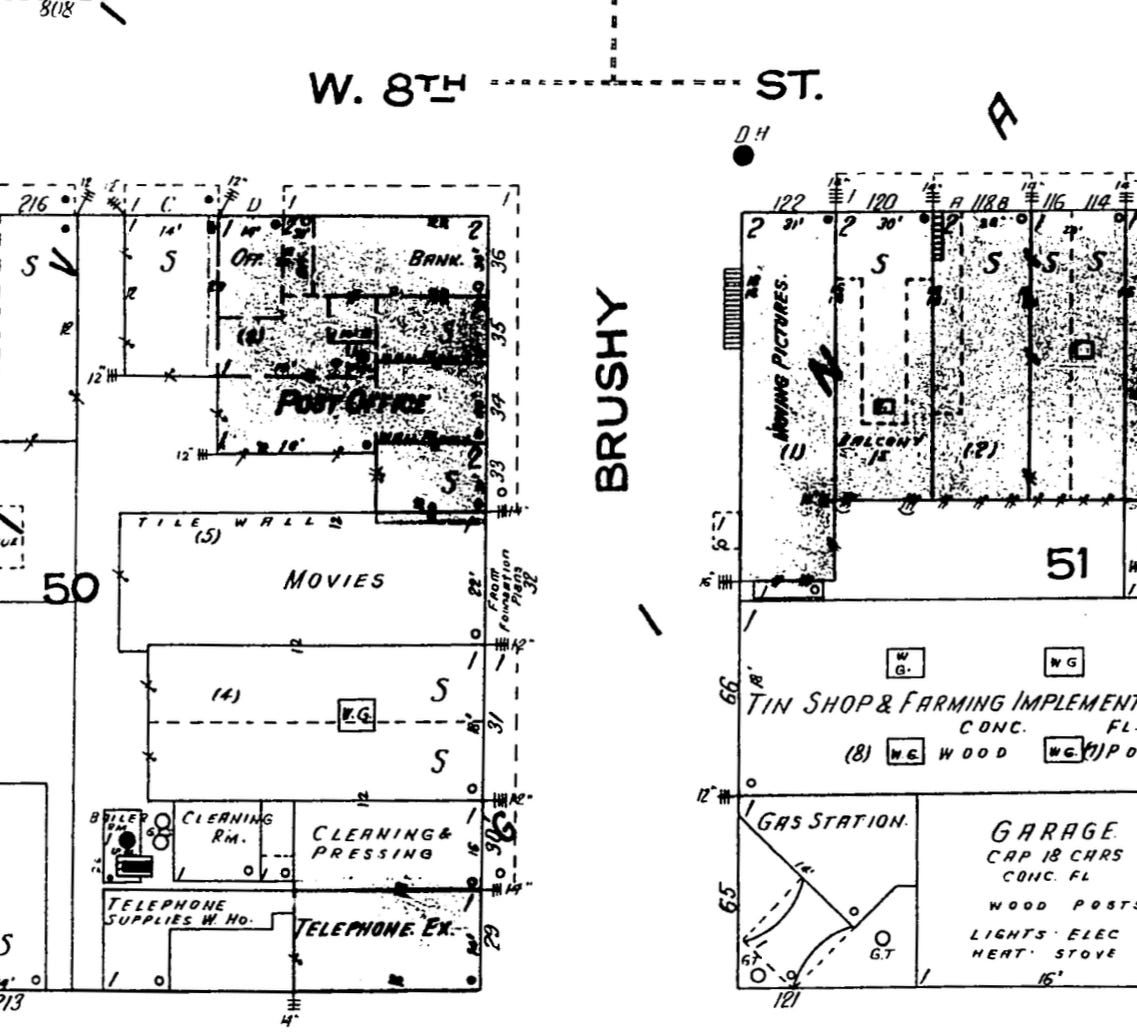
In February 1910 the Sanborn insurance mappers came through and recorded it: “THE AIRDOME. No Roof. SEATS,” an open lot behind its fence with a barber shop next door.
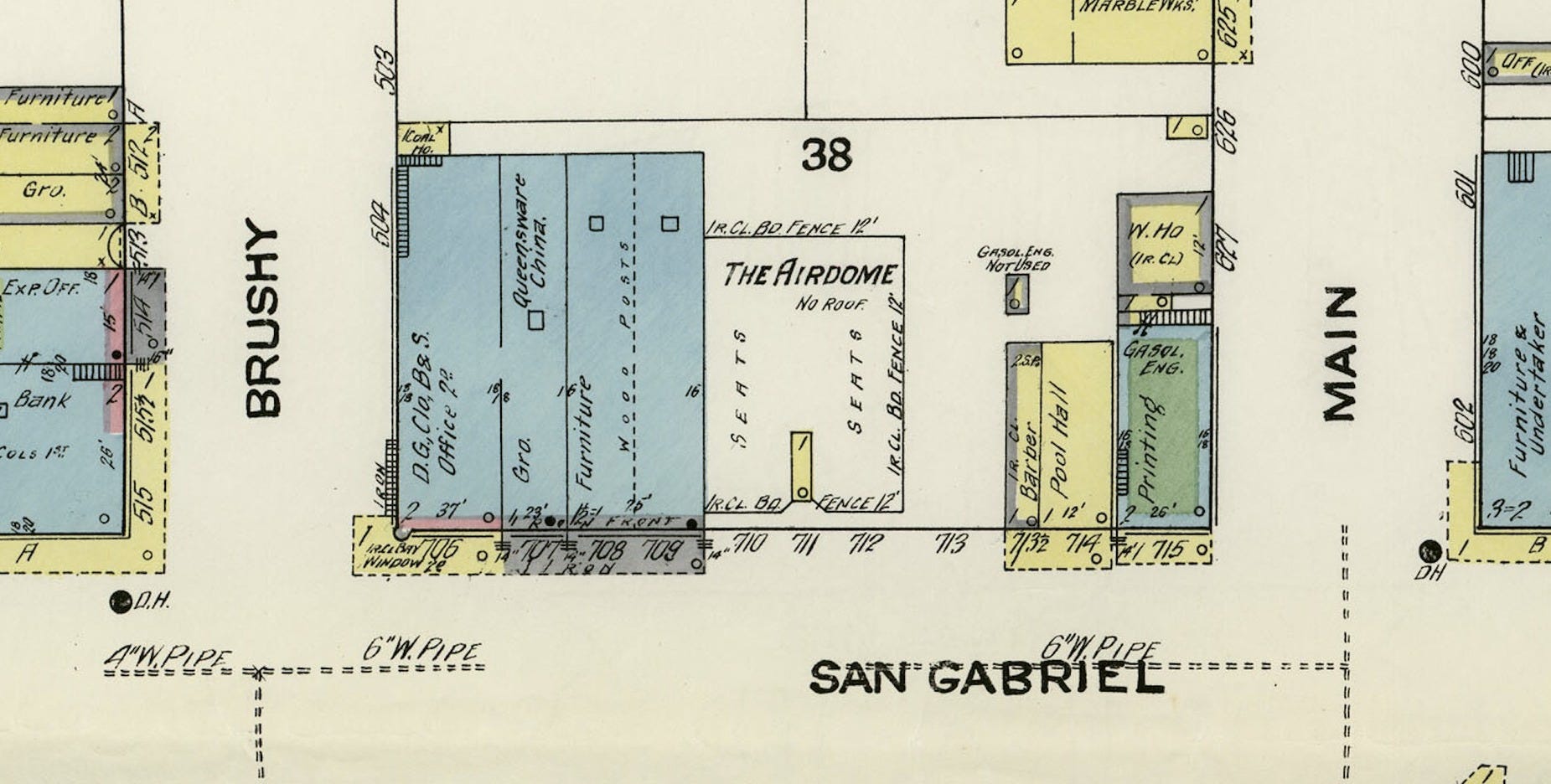
The Sanborn mappers drew it in winter, standing empty, because in the cold months Goodlett carried the show indoors: one winter sharing quarters with the Buvette, a fine-candies-and-cigars parlor on the east side of the square, and the next in the Glasscock row opposite the post office.
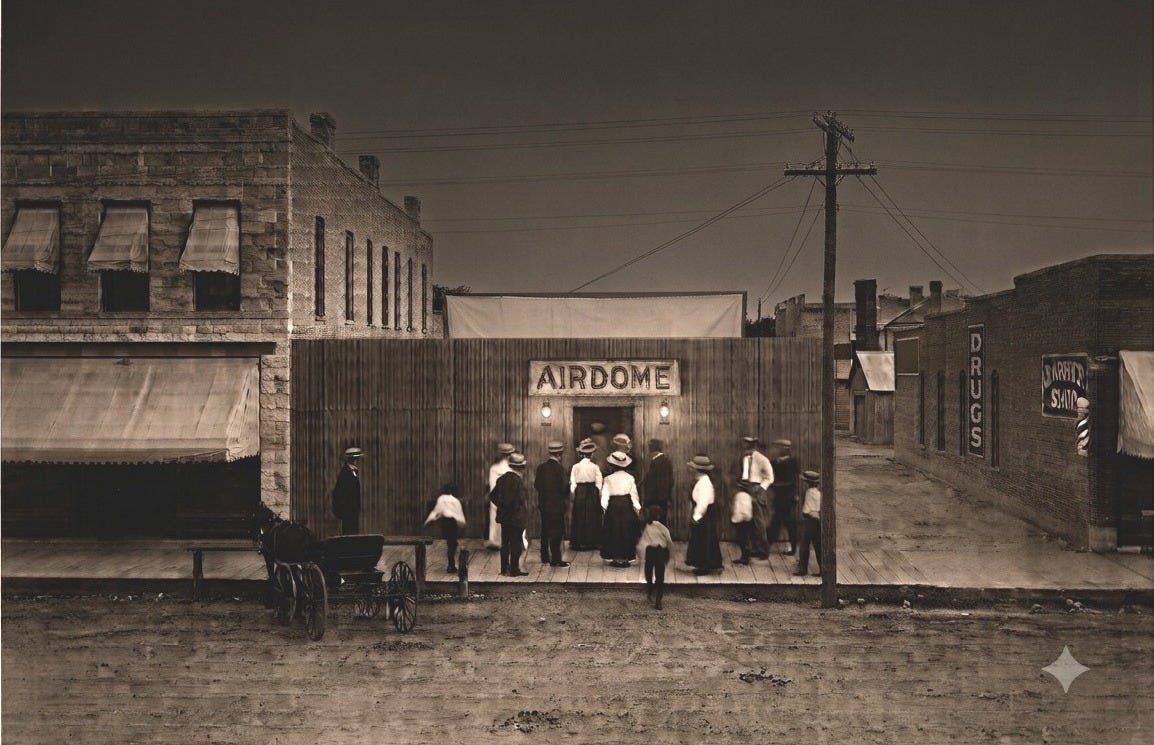
I didn’t find a photograph of the Airdome, and it’s likely that none exist, so this is a recreation of what it might have looked like around 1910.
That same February map catches a rival. In December 1909 two men named Grayson and Sherman had opened a picture show of their own in the Glasscock block, its lights run off a dynamo driven by a six-horsepower gasoline engine. “With two good picture shows,” the Sun said, “Georgetown will not lack for amusements.” Grayson retired that April, and the paper reported that Goodlett had “the field to himself again.”
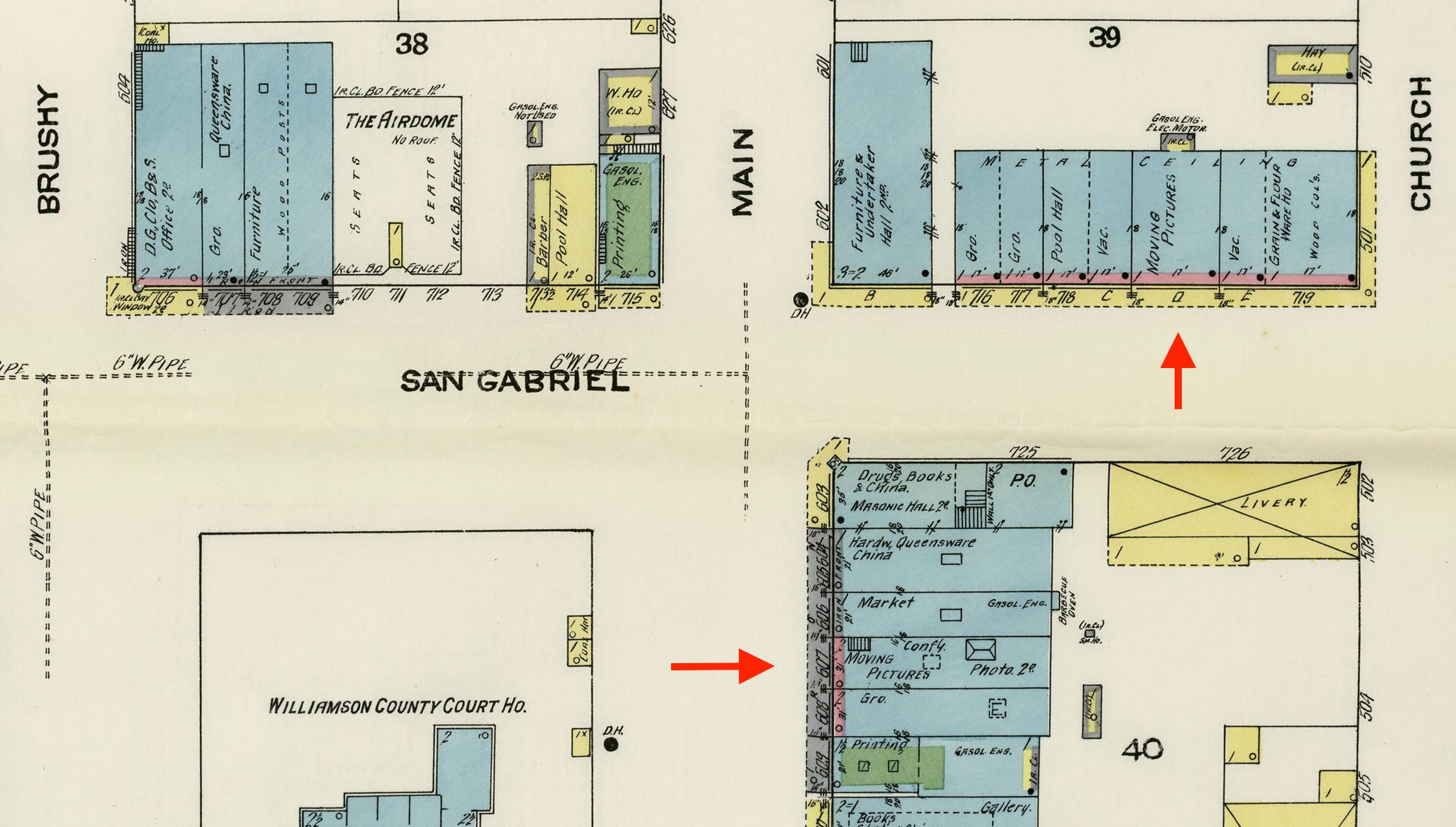
The Airdome itself kept growing. In October 1909 Goodlett enlarged it to treble its seating; a school benefit that November advertised a thousand seats.
Which brings us back to that May night in 1910, when the stage went in and the curtains went up and the St. Cecelia Club played a three-act comedy to the open sky. Whatever else the Airdome was, it had become the town’s theater.
And that same month, the ground went out from under it.
Moving Day
In February 1910, just before the mappers drew the Airdome, A. A. Booty sold its vacant lots to the Hon. Jno. M. Horger for $7,000. Horger, said the Sun, “will build thereon at an early date.”
Goodlett got one more season out of it. Then, on February 16, 1911, the paper ran two lines at the bottom of page five:
“Dave Goodlett has moved his Airdome pavilion from the north side of the square to the lot south of the Good Luck Store, entrance being afforded by the alley.”
He didn’t close it. He picked it up and carried it. The fence, the seats, the whole roofless house went across the square to the ground behind the Good Luck Store at the southeast corner, the old Dimmitt hotel building, and the way in was through the alley off Main.
The photo below is a southeast view of Main Street. The courthouse is just to the right off camera. You can see where 8th Street crosses Main; if you zoom in, you can just tell that that awning on the Old Dimmitt Building reads "Good Luck Store.” The Airdome’s second location was just on the other side of that building.
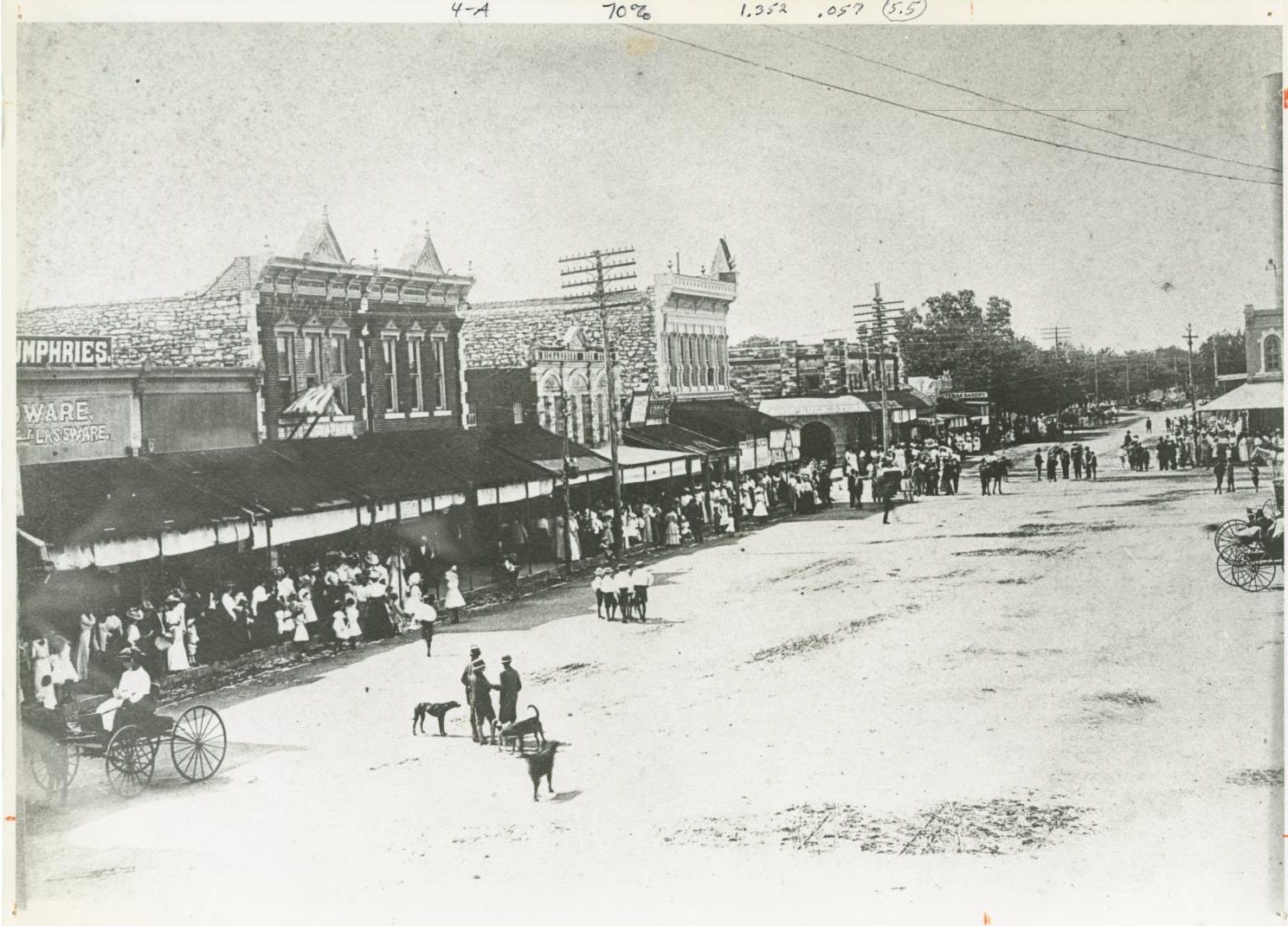
Five days before the notice ran that Goodlett was moving the Airdome, a rival called the Dixie was being installed next door to the Odd Fellows’ Temple. Goodlett bought it out in August.
One Corner
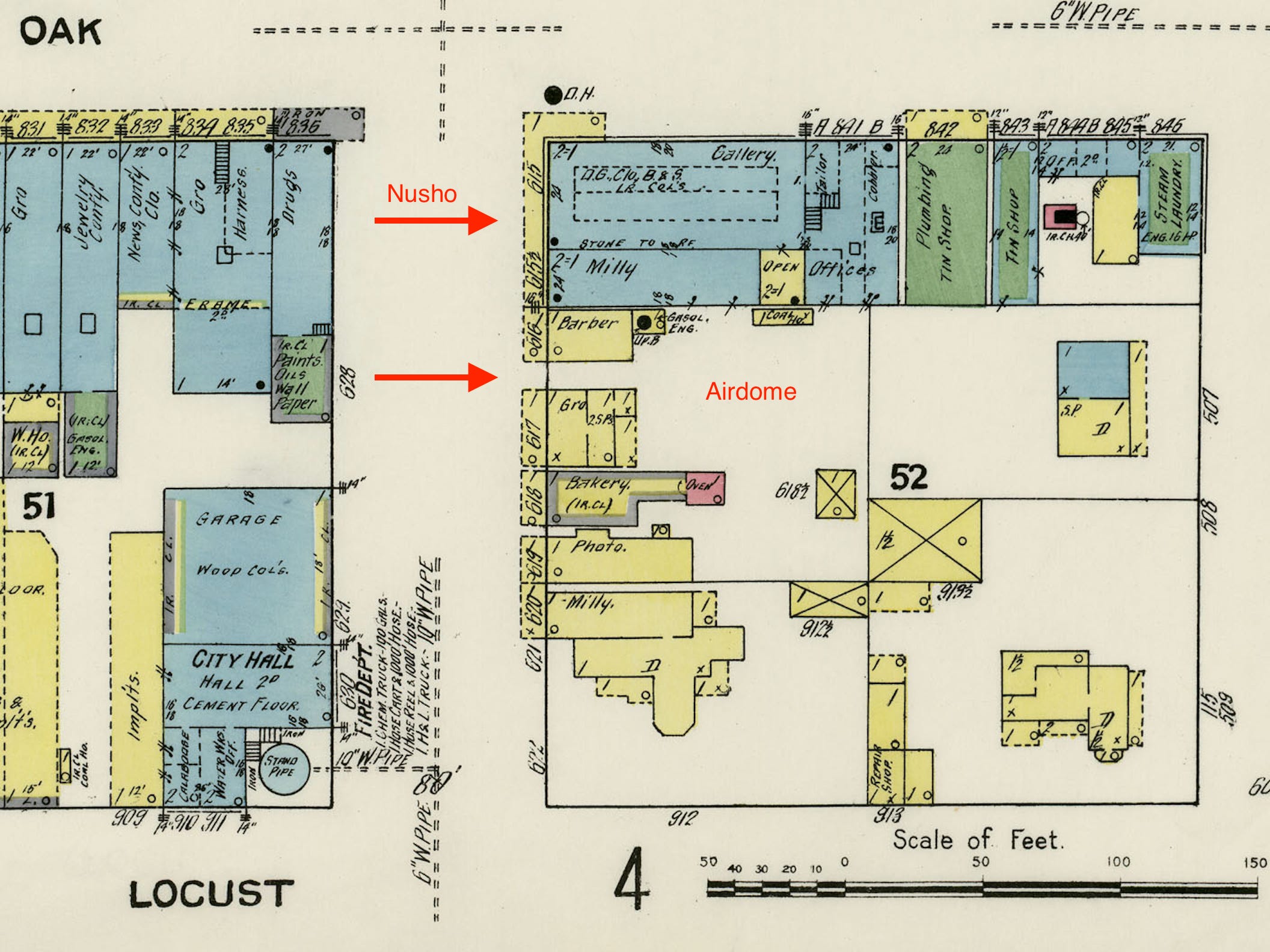
Here’s one of my favorite parts: by that fall Dave Goodlett had a second moving picture house at the same corner, indoors, called the Nusho. Say Nusho out loud… Hear what he did there?
The Nusho fronted the square. The Airdome sat on the ground behind it. And his November 1911 advertisement, which I had first read as a man running back and forth across the square, turns out to describe a single address:
“I will show at the ‘Nusho’ every afternoon from 3 till 5. Will show at both places at night, when the weather is so I can show in Airdome. Different program at each place... except when the weather is too bad to show in Airdome, then complete change of program at night at ‘Nusho’.”
A roofed house and a roofless one, back to back, with an alley between them and the programme decided by the sky. When the weather turned, he walked the audience indoors.
The prices never moved. In May 1913 he booked the five-reel From the Manger to the Cross, afternoon at the Nusho and night at the Airdome, and let the ad do the talking: “First time shown anywhere for 5c and 10c. A few days ago in Austin for 25c. I never advance admission price.”
The Town’s Hall
The Airdome was a business, but it doubled as something closer to a public institution. On the Fourth of July in 1908, flags flew from exactly four buildings in Georgetown: the post office, the courthouse, Wilcox’s photograph gallery, and Dave Goodlett’s Air Dome.
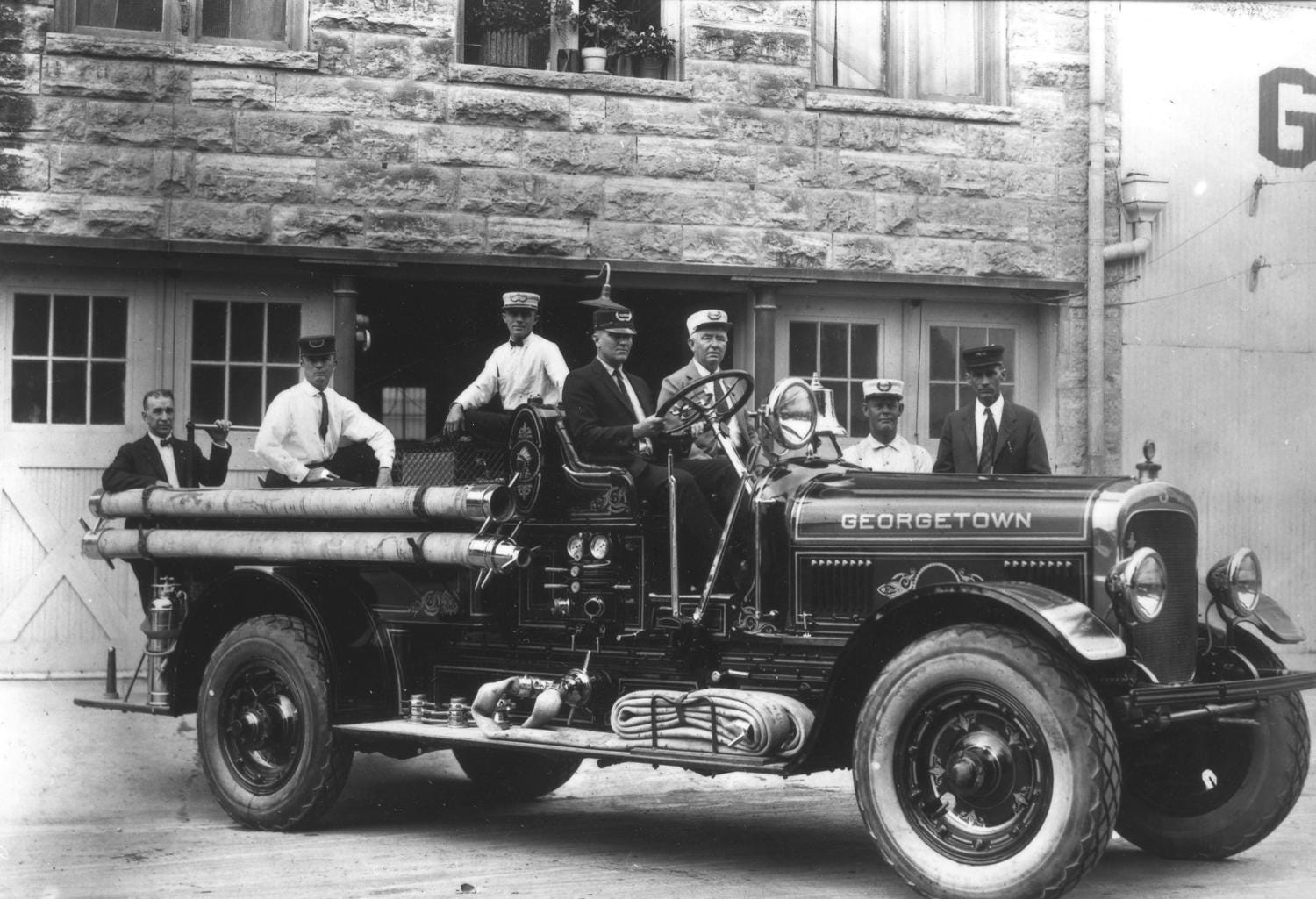
The fire department connection never faded, and no wonder: the chief of the Georgetown Fire Department was Dave’s own brother, P. J. Goodlett. At the firemen’s picnic of May 1913, when fifty-five merchants (the Sun among them) agreed to close all day, the parade marched “in charge of Chief Goodlett,” the benefit shows that night ran at both of Dave’s houses, and the queen’s float was driven up in front of the Nusho for the crowning of Miss Beulah Thompson. The Sun’s write-up ended on “a display of fireworks which lighted up the streams of water thrown from the hose.”
In the summer of 1912, the churches moved in. All season, the congregations of Georgetown held union services together at the Airdome on Sunday nights, in the roofless lot behind the store. Twenty-eight years earlier, Fogy had warned the town that a play-house would sap the foundation of religion; when the series closed in September, the preachers praised the large attendance and the good order maintained, and the collections had run three times the expenses, with the surplus going to the King’s Daughters.
The Monarch
In September 1913 Goodlett bought a building of his own at last: the two-story stone building at the southwest corner of the square, from Booty & Cody, for $12,500, with $1,500 down and the rest in notes. The family moved in upstairs, reached by an exterior stairway up the side wall. That building is still standing, and those stairs are still there: it’s the building that houses Kilwin’s Ice Cream today.
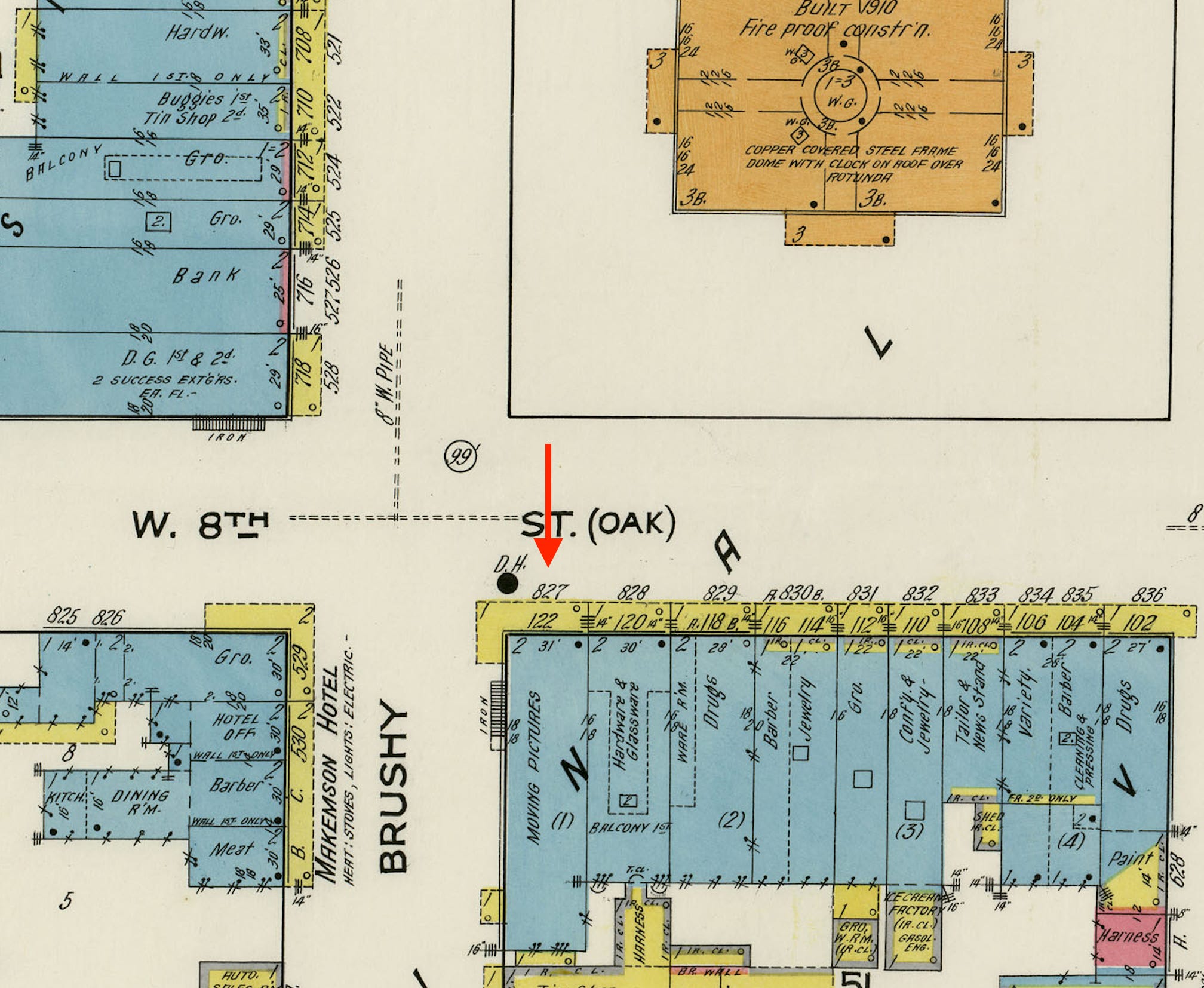
Dave Goodlett let the town choose the new name. The contest drew several hundred entries, and the winner, announced at the Airdome, was Miss Kate Elliott’s “Monarch.” Her prize was a year’s free ticket.
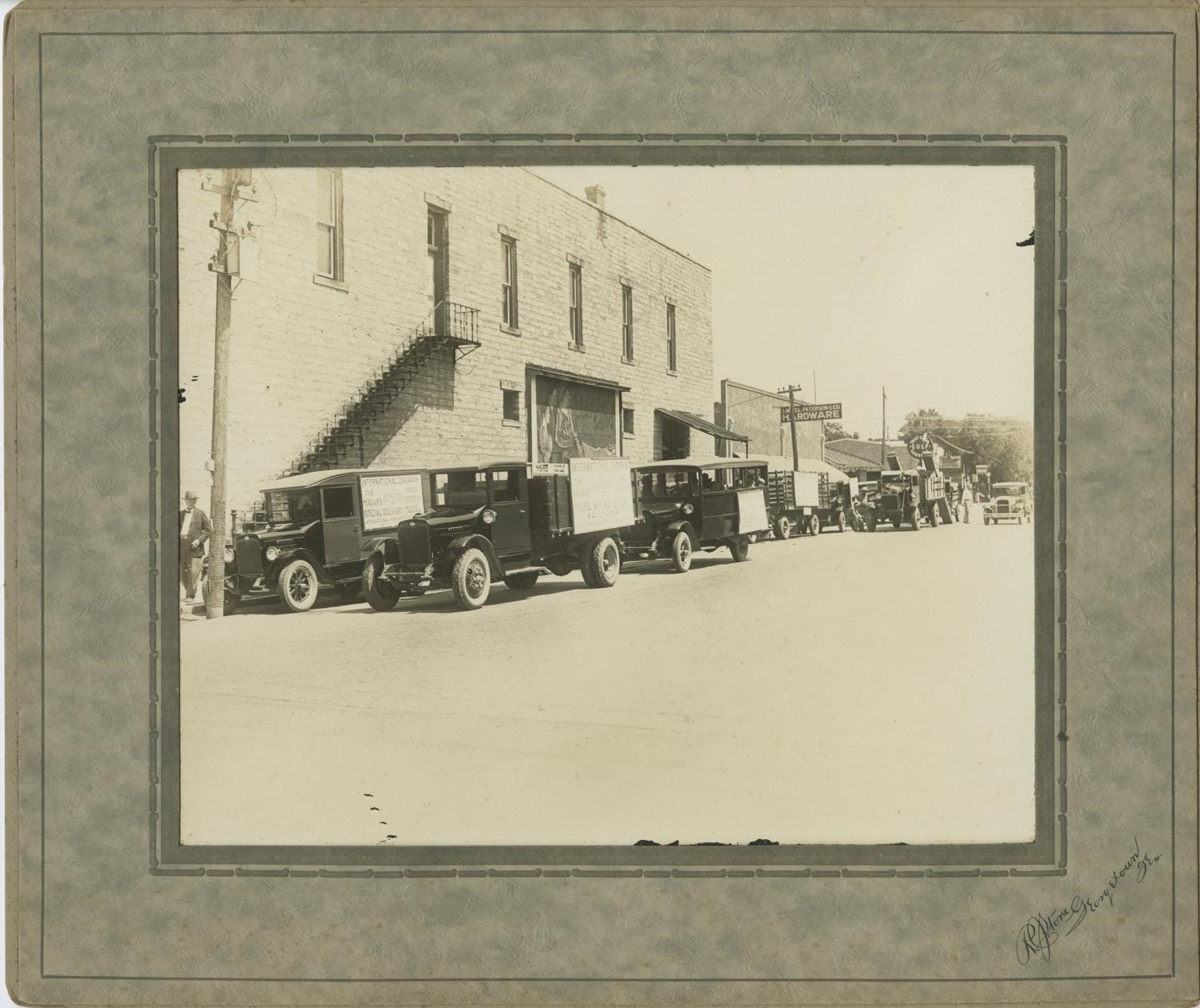
The Monarch was a theater in full: a week of live plays in January 1914, a Wurlitzer motion picture orchestra shipped up from Dallas in 1916, and by 1922 a pipe organ the Sun claimed made Georgetown the smallest town in the state to have one. It was the kind of place a town measures other places by. When Colonel Makemson wrote up the history of the Georgetown post office in 1916, he located one of its 1870s homes simply: “in the rear of what is now Goodlett’s picture show.”
Back at the southeast corner, the Good Luck Store didn’t move out. It failed in place. The Magee Co. went into trustees’ hands in the spring of 1916, sold off twenty thousand dollars of goods that May, and by that fall the name was gone from the square. In March 1917 C. B. Atkinson turned the store’s own room into a picture show and called it the Lyric, “southeast corner of square,” and for a few months Georgetown had two houses again. He sold it in October. In November the Sun buried it:
“The brief, bright and brilliant days of The Lyric are over… the beautiful room, cured of its dissipation and frivolity, will return to the sober paths of commerce proper.”
On March 8, 1920, Dave Goodlett died suddenly in Hodges Bros. drug store. He was 46. Every business house in town closed for his funeral, and the floral offering was one of the largest the town had ever seen, with moving picture men from around the state sending wreaths.
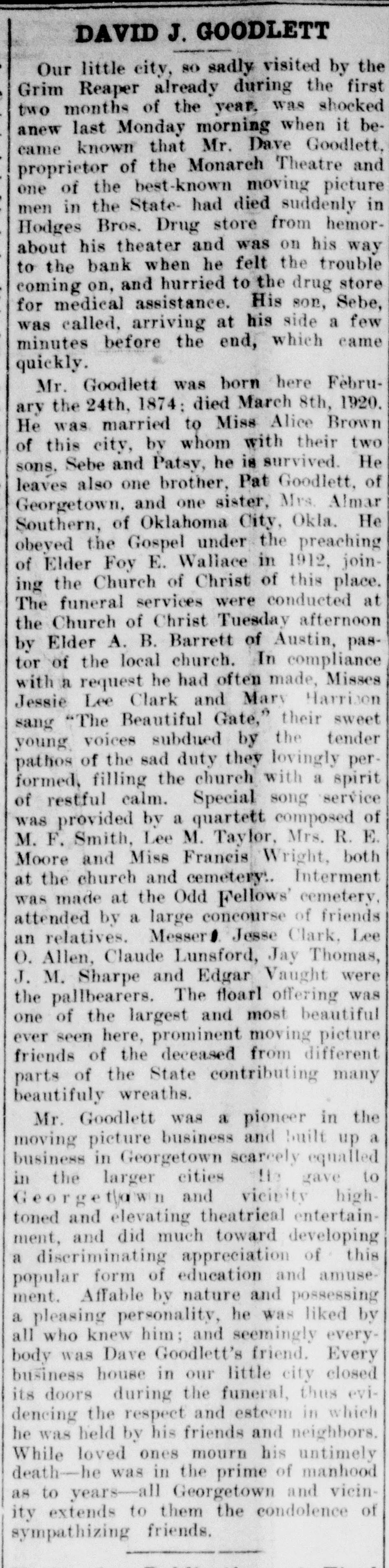
He died owing $10,500 on the theater. His widow, Alice, was no newcomer to the business; when the family ran the picture concession at the 1913 Old Settlers’ reunion, the association’s published accounting credited the time and labor of “himself, his wife and one son, free of charge.” She and their son Sebe kept the Monarch running, and in April 1921, thirteen months after his death, the county record closed the account: “Mrs. Alice Goodlett, surviving wife... has paid the said notes and all interest thereon.”
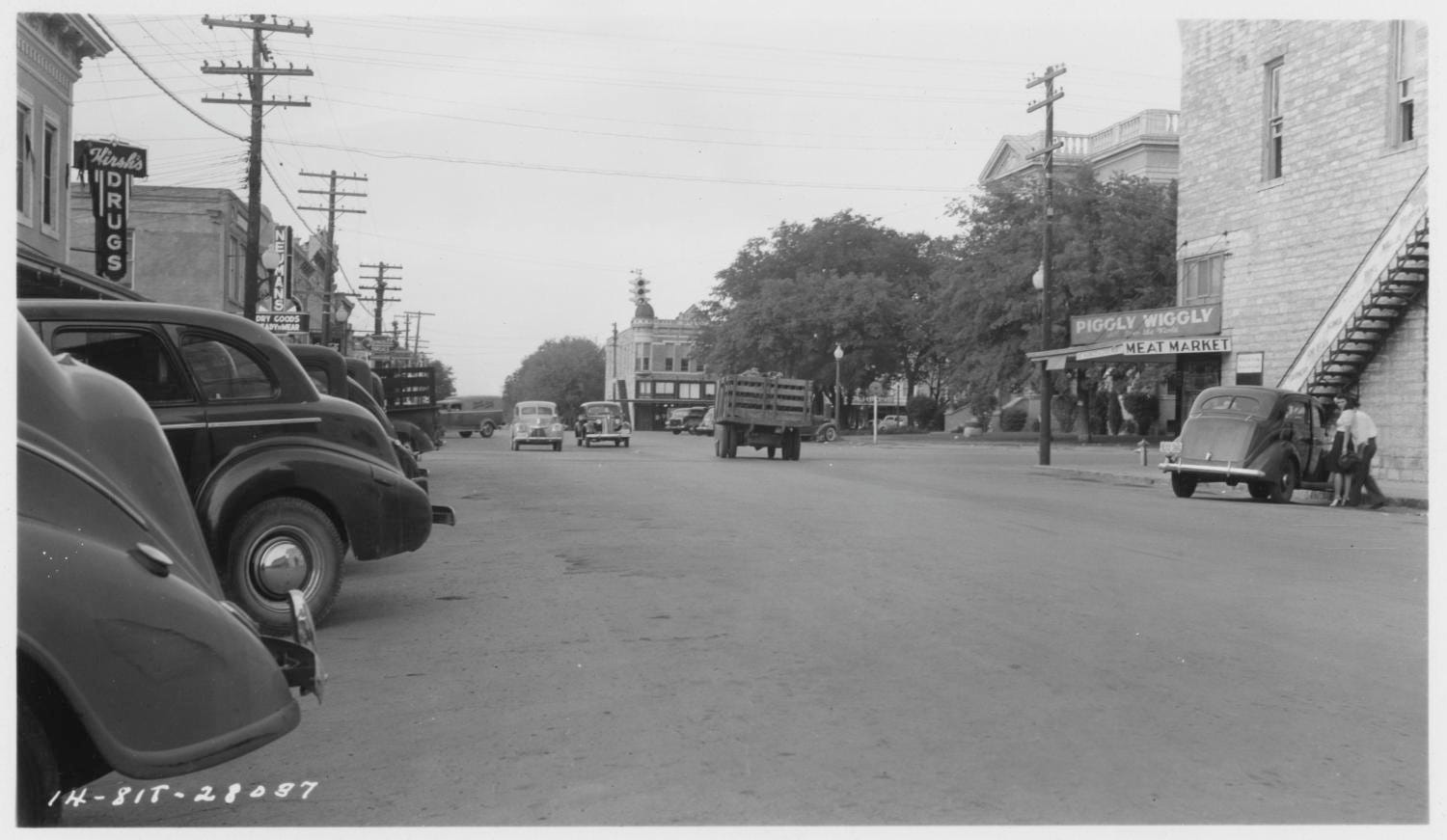
In 1928 she and Sebe sold the Monarch to O. A. Engelbrecht, who by then was running the Palace. He renamed it the Gem and operated both houses. At the end of 1934 the old theater became a Piggly Wiggly, and the Sun noted that the floor still sloped toward the rear, the way a theater floor does.
The Ground
The Palace arrived on Friday, February 26, 1926, built by F. E. Hodges just south of the City National Bank, and it opened to a full house with even its standing room taxed.
The Palace seems like the exception—the one theater that never became something else. But it did go dark in 1989. It’s a theater today because a group of Georgetown people wouldn’t let it go. That’s the real difference between the Palace and everything else in this story. Not that it was spared what happened to the others, but that when its turn came, the town came back for it. (And we’re still looking out for it today.)
Everything else got put to another use, and the Airdome’s first ground is the best example of it. Horger built, as he said he would; by the fall of 1912 there were buildings standing where the Airdome had been.
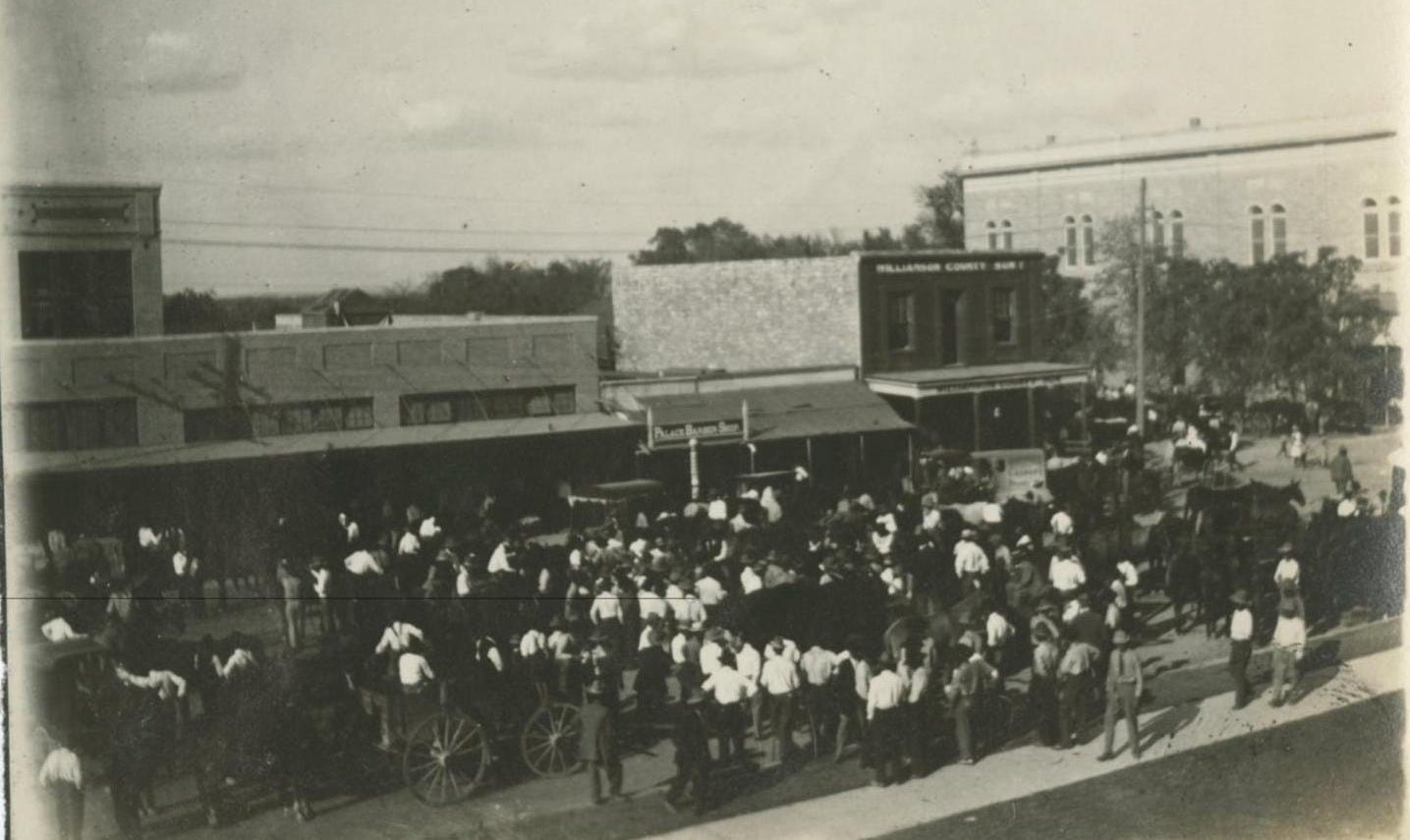
Among the tenants was the post office. The town’s mail was sorted on the spot where the moving picture show had been.
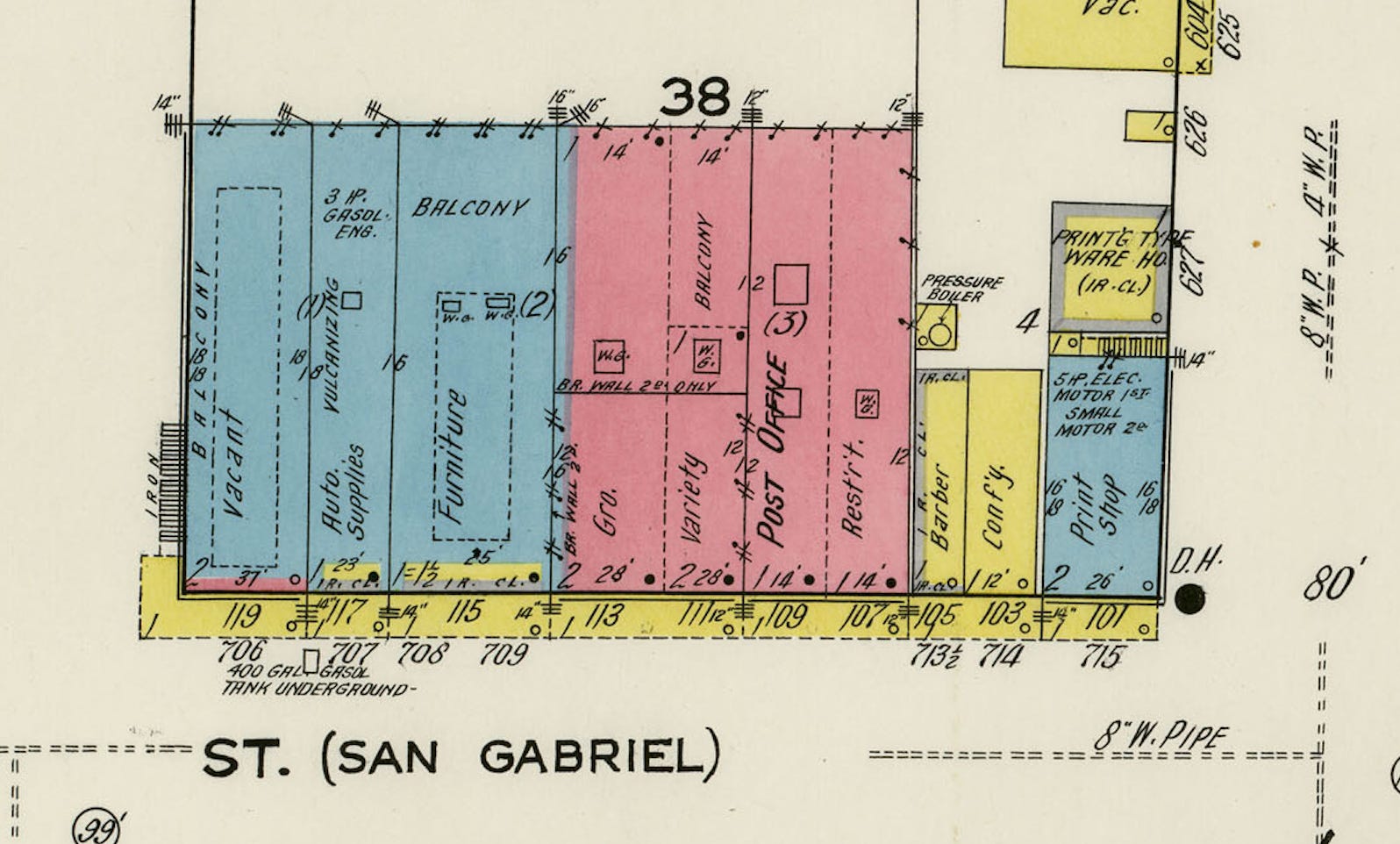
In 1928 the Busy Bee Cafe opened there, mirrors down the length of the dining room and marble at the counter. In 1936 that cafe building was made over into a new movie house, the Ritz, so the pictures came back to the Airdome’s dirt twenty-five years after they left it. Georgetown had a second picture house until three months before that. The Aztec opened on the east side of the square in March of 1935 and burned five days before Christmas. A rebuild was announced in January and cancelled three weeks later: with the house dark, its manager had lost his picture contracts. Nine months and six days, and then the Aztec's room became a dry goods store. The Ritz burned out inside in 1937, was rebuilt, and ran into the mid-1950s. And in 1960, Gold’s Department Store expanded next door, took the Ritz’s building inside itself, and bricked over its face, working the S of G-O-L-D-’S into the new brick.
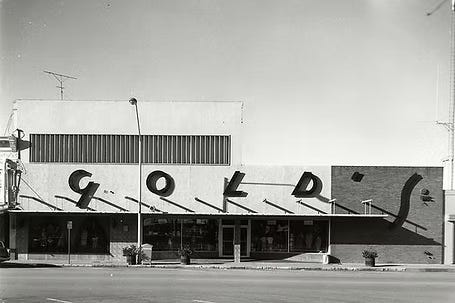
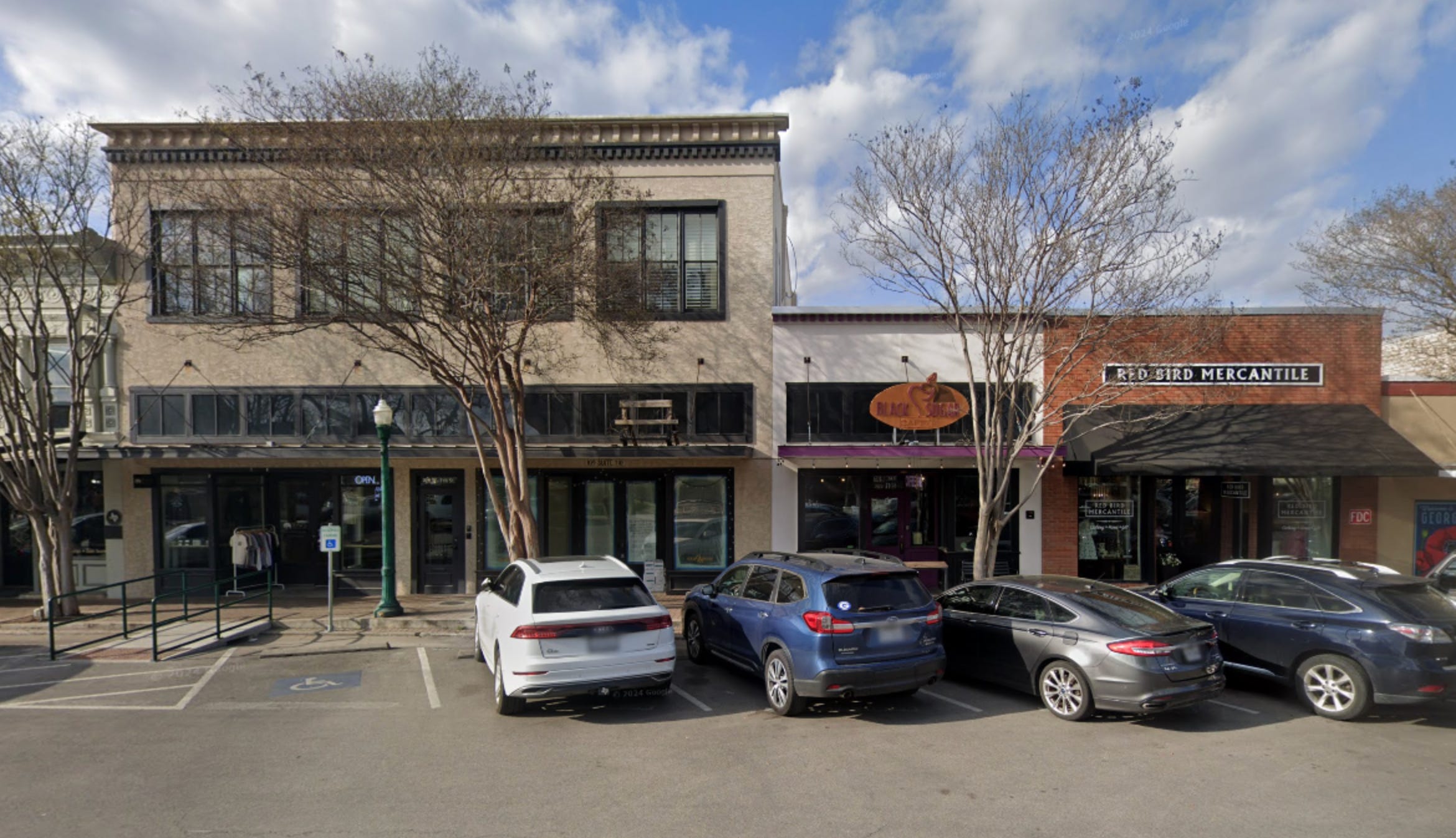
The Ritz is still standing on the north side of the square today. Gold’s closed in 1996, and at some point the small building with the bricked-in front was turned back into a storefront of its own. The building that used to be the Ritz Theater is Red Bird Mercantile now, on the lot where the people of Georgetown once watched a comedy under the open sky.
Under The Sky
One more thing, for the road.
In August of 1950 the Sun announced a new theater two miles north of the courthouse, on the Dallas highway. It would hold two hundred and fifty cars, with a speaker for every one of them, a playground for the children, and bottle-warming facilities for the parents. It was called the Dusk Drive-In, and it opened that September on a Zane Grey western, with two shows a night, the first one starting at dusk.
In among the specifications, the paper mentioned one more amenity: lawn chairs, for those who’d rather sit out in the open than in their automobiles.
Forty years after Dave Goodlett carried his roofless house across the square, Georgetown was sitting outdoors under the sky again, watching a picture, at the whim of the weather.
Sources
The opera house, 1884 to 1901. “The Opera House,” The Williamson County Sun (Georgetown, Texas), 2 October 1884, p. 2 (the Georgetown Opera House Company organizes; Whittle & Harrell contracted; the house “built on the first corner south of Leavell & Seery’s store, and the entrance will be on Brushy street”; 200 opera chairs, scenery from Chicago); construction note, 9 October 1884, p. 3 (”pushed forward as rapidly as possible”); “Against the Opera House,” letter signed “Fogy,” 23 October 1884, p. 4; skating rink note, 16 April 1885, p. 3; “Our Country Cousin at the Opera House,” 5 December 1895, p. 3; livery stable note, 10 September 1896, p. 3; “Opera House” (A Yankee Drummer booked for 21 December), 17 December 1896, p. 1; city council stable sheds petition, 16 December 1897, p. 4; Nowlin & Morse, “The New Livery Stable in Old Opera House,” display advertisement, 27 December 1900, p. 2.
“An Opera House Needed,” The Williamson County Sun, 14 February 1901, p. 1; “Opera House In Sight,” 21 March 1901, p. 17; “Opera House in Sight” (the Odd Fellows resolve on a three-story stone building with an auditorium on the second floor), 30 May 1901, p. 8.
The first picture show, 1907 to 1908. Opening notice, The Williamson County Sun, 21 March 1907, p. 5 (”Dave Goodlett and Fred Bredthauer are getting ready to open up a moving picture show in the Eidman building”); fire department benefit at the public school auditorium, 2 May 1907, p. 5; “largest canvass and coolest place in town,” 18 July 1907, p. 5; “An Old Landmark Destroyed” (the chili stand fire and the 1853 stone law office), 15 August 1907, p. 1; Dave Goodlett’s rural mail route appointment, 24 December 1903, p. 10.
“A Race for a Million at the Airdome,” The Williamson County Sun, 9 April 1908, p. 5; “Get the habit; visit the Airdome,” 16 April 1908, p. 5; Fourth of July flags on four buildings, 9 July 1908, p. 5.
The Airdome on the north side, 1908 to 1911. Enlargement to treble its seating, The Williamson County Sun, 28 October 1909, p. 5; “Public School Benefit” (a thousand seats advertised), 4 November 1909, p. 1; Airdome price advertisement, “Welcome as the flowers in May. My motto: to please,” 2 December 1909, p. 5.
The fence and the enclosure: “Ellyson Finds Old Handbill,” The Williamson County Sun, 17 July 1958, p. 4, recalling the Airdome as “a roofless, floorless, galvanized, walled enclosure … first located on the north side of the square, operated by the late Dave Goodlett”; corroborated by the February 1910 Sanborn’s own lettering, “Ir. Cl. Bd. Fence 12’.”
The winter quarters: “Airdome Annex,” SU Megaphone (Southwestern University, Georgetown), 17 December 1909, p. 3 (”Dave Goodlett has moved into winter quarters with his picture show with the Buvette … East side square with the Buvette”); the Buvette identified by its own advertisement, “The Buvette / Fine Candies and Cigars / W. B. Overby, Proprietor,” SU Megaphone, 11 October 1907, p. 4; the following winter in the Glasscock row, SU Megaphone, 28 October 1910, p. 4.
The rival show: “New Moving Picture Show” (Grayson and Sherman in the Glasscock block, lights run off a six-horsepower gasoline engine), The Williamson County Sun, 2 December 1909, p. 8; A. S. Grayson’s retirement and Goodlett with “the field to himself again,” 7 April 1910, p. 5.
“Night Entertainment at Airdome” (the St. Cecelia Club; the stage fitted up, curtains hung, seating capacity about a thousand; the house given free), The Williamson County Sun, 5 May 1910, p. 1, as reprinted in the Sun Centennial edition, 19 May 1977, p. 36.
Moving day, 1910 to 1911. A. A. Booty sells the Airdome’s vacant lots to the Hon. Jno. M. Horger for $7,000, “will build thereon at an early date,” The Williamson County Sun, 10 February 1910, p. 5.
“New Theatre” (the Dixie installed by W. A. Newton next door to the Odd Fellows’ Temple), The Williamson County Sun, 11 February 1911, as quoted in the Sun Centennial edition, 19 May 1977, p. 46.
The removal notice, The Williamson County Sun, 16 February 1911, p. 5: “Dave Goodlett has moved his Airdome pavilion from the north side of the square to the lot south of the Good Luck Store, entrance being afforded by the alley.”
Goodlett purchases the Dixie, The Williamson County Sun, 17 August 1911, p. 7.
The southeast corner, 1911 to 1913. “Nusho News,” Goodlett’s advertisement, The Williamson County Sun, 9 November 1911, p. 5; city council popcorn platform item placing the Nusho at the southeast corner of the square, 14 March 1912, p. 6; From the Manger to the Cross advertisement, “I never advance admission price,” 1 May 1913, p. 5.
The Good Luck Store’s building identified as the old Dimmitt hotel: “Old Dimmitt Building,” Texas Historical Commission marker 13920, erected 1965; Woman’s Club room “in the Atkinson Building, the old Good Luck Store,” The Williamson County Sun, 4 April 1918, p. 3; Towns Automobile Co. advertisement, “The Atkinson Building, Southeast Corner Public Square,” 19 September 1919, p. 7; Don Scarbrough, “the passing glance,” 23 July 1964, p. 1 (”a Good Luck Store where the Georgetown Savings and Loan now resides”); “Two Open Air Theatres” recollection, Georgetown Sunday Sun, 21 August 1977, p. 3.
The Good Luck Store's failure and the Lyric: W. F. Magee Co. in trustees' hands, The Williamson County Sun, 9 March 1916; creditors' sale, "$20,000 worth of seasonable merchandise," 11 May 1916; the stock sold to J. A. Fox of Hereford "at the old stand," 14 September 1916; the Lyric Theatre's standing subhead, "Southeast corner of square," 5 April 1917; "Mr. C. B. Atkinson has sold the Lyric Theatre," 11 October 1917; "The brief, bright and brilliant days of The Lyric are over" and "Mr. Atkinson will put back his splendid store room into its original shape," 15 November 1917.
The town’s hall. “Open Air Services Discontinued” (the summer’s union services at the Airdome; attendance, good order, collections three times expenses, the surplus to the King’s Daughters), The Williamson County Sun, 12 September 1912, p. 10; firemen’s picnic closing agreement, 1 May 1913, p. 8; “Firemen’s Picnic Today,” 8 May 1913, p. 5; the picnic write-up (the parade “in charge of Chief Goodlett,” the queen’s float before the Nusho, Miss Beulah Thompson crowned), 15 May 1913, p. 6.
P. J. Goodlett as fire chief: “Goodlett Announces for City Marshal,” The Williamson County Sun, 21 November 1924, p. 9; “Fire Chief P. J. Goodlett Passes to Rest,” 1 June 1928, p. 5; the brothers’ relationship, “D. J. Goodlett Is Dead,” The Austin American, 10 March 1920, p. 3.
The Monarch and the Goodletts. Deed, A. A. Booty and C. C. Cody to Dave Goodlett, 4 September 1913, west half of Lot 1, Block 51, Williamson County Deed Records, Vol. 189, p. 274 (recorded 1919); extension of vendor’s lien, 6 September 1919, Vol. 189, p. 276; release of vendor’s lien to Mrs. Alice Goodlett, 27 April 1921.
“Miss Kate Elliott Names the Monarch,” The Williamson County Sun, 18 September 1913, p. 8; Angell’s Comedians at the Monarch, 15 January 1914, p. 5; the Wurlitzer motion picture orchestra, 24 February 1916, p. 1; the pipe organ, 1922, as reprinted in the Sun‘s “46 Years Ago” column, 23 May 1968, p. 2; Col. W. K. Makemson, history of the Georgetown post office, 13 January 1916, p. 2; Old Settlers Association finance statement crediting the labor of “himself, his wife and one son, free of charge,” 14 August 1913, p. 4.
“Georgetown Theater Proprietor Drops Dead,” Austin American-Statesman, 9 March 1920, p. 5; “D. J. Goodlett Is Dead,” The Austin American, 10 March 1920, p. 3; “David J. Goodlett” (the funeral, the floral offering, wreaths from moving picture men around the state), The Williamson County Sun, 12 March 1920, p. 5.
“Englebrecht Buys Monarch Picture Theatre,” The Williamson County Sun, 8 June 1928, p. 1; “Old Monarch Theatre Renovated,” 6 July 1928, p. 1; “Piggly Wiggly to Locate in Old Theatre Building” (the floor still sloping toward the rear), 28 December 1934, p. 1.
The Palace. Construction, “being erected south of the City National Bank by Mr. F. E. Hodges,” The Williamson County Sun, 20 November 1925, p. 8; “Palace Theatre Gives Opening Program Friday,” 26 February 1926, p. 1; “Palace Theatre Opens,” SU Megaphone, 2 March 1926, p. 1 (opened “last Friday night with its seating capacity filled and its standing room taxed”; the building “erected and owned by F. E. Hodges of Georgetown”); “New Palace Theatre Opened With Talkies,” 15 November 1929, p. 1.
The Palace as a movie house, its closing in late 1989, the founding of Georgetown Palace Theatre, Inc. in December 1990, the ninety-day reopening and the Palace Guard: “History,” Georgetown Palace Theatre, georgetownpalace.org. The 2026 flood damage and the community response: Community Impact, “Georgetown Palace Theatre to reopen May 29 after flood causes $500K in damages.”
The ground, and the Ritz. The Aztec: "New Theatre Opened Thursday Nite" (the new theatre in the Evans building, opened Thursday 14 March 1935 by C. J. Stephens of Temple, on It Happened One Night), SU Megaphone, 19 March 1935, p. 1; the Aztec under new management, L. B. Crow proprietor, SU Megaphone, 8 October 1935; the fire of Friday 20 December 1935, which "started in the projection room," The Williamson County Sun, 27 December 1935, as reprinted in the Sun's "20 Years Ago" column, 1955; the rebuild announced, A. S. Evans owner and Frank and Claude Lundsford contractors, 10 January 1936; the rebuild cancelled, "because of the fire, his contracts for pictures had been lost," 31 January 1936; Hoffman & Son's new store built "out of the old location formerly occupied by the Aztec Theatre," Evans Building, east side of the square, 20 March 1936, p. 1. Busy Bee Cafe formal opening, The Williamson County Sun, 11 May 1928, p. 4; “Engelbrecht To Open New Theatre Soon,” 17 January 1936, p. 5; “New Theatre To Show First On Tuesday,” 20 March 1936, p. 1; the 1937 fire, reported in the Sun‘s “20 Years Ago” column, 4 July 1957, p. 6, reprinting the Sun of Friday, 2 July 1937 (contractors at work on “the buildings damaged by fire recently, occupied by The Famous and Ritz Theater”), and in “Yesteryears / 20 Years Ago,” 29 August 1957, p. 8, reprinting 27 August 1937 (O. A. Engelbrecht announcing the Ritz “nearing completion”); insurance rate increase following the town’s costly fires, 3 March 1939, p. 1; Ritz and Palace advertisements, 17 November 1955, p. 3; Gold’s Department Store expansion items (the front of the Ritz building bricked solid, “with the ‘S’ of the panoramic ‘G-O-L-D-’S’ name built in with a different colored brick”), 25 February, 3 March, 19 May and 16 June 1960; “Enjoying Gold Burger Diner in our golden years” (Gold’s closing in 1996), The Sunday Sun (Georgetown, Texas), 23 February 2025, p. 5.
The Dusk Drive-In. “New Drive-In Theatre to Open September 7,” The Williamson County Sun, 24 August 1950, p. 13; “New Drive-In Theater To Open Saturday” (250 cars, a speaker for each, playground, bottle-warming facilities, and lawn chairs for those who would rather sit in the open), 14 September 1950, p. 1.
Maps. Sanborn Map Company, Insurance Maps of Georgetown, Williamson County, Texas: August 1885, sheet 1; 1894; November 1905; February 1910, sheet 3; May 1916, sheet 2; 1925, sheet 2. Digital images, Sanborn map collection, Dolph Briscoe Center for American History, University of Texas at Austin.
Photographs. “[Main Street with buggies, Georgetown],” photograph, date unknown, The Portal to Texas History (texashistory.unt.edu, ark:/67531/metapth182577), crediting The Williamson Museum, accession WM_2005.060.172. “Georgetown Firemen on Firetruck,” photograph, date unknown, The Portal to Texas History, crediting The Williamson Museum. “Cars on street in Georgetown,” photograph by R. Stone, 1927, The Portal to Texas History, crediting The Williamson Museum. “First Monday Trade Days, Georgetown,” photograph, 1912, The Portal to Texas History, crediting The Williamson Museum. “U.S. Highway 81 in Georgetown,” photograph, 20 October 1940, The Portal to Texas History, crediting the Texas Department of Transportation. Gold’s Department Store, undated photograph, Preservation Georgetown. Seventh Street north of the courthouse, Google Street View, 2024.
The Airdome illustration is an AI reconstruction generated with Google Gemini in August 2026, composed from the February 1910 Sanborn map and contemporary newspaper descriptions. It is not a photograph, and no photograph of the Airdome is known to survive.
Old Town Echoes is independently researched using primary historical sources. AI tools assist in drafting and editing; all content is reviewed, sourced, and verified by the author.